Palais Garnier: The Real-Life Phantom Setting
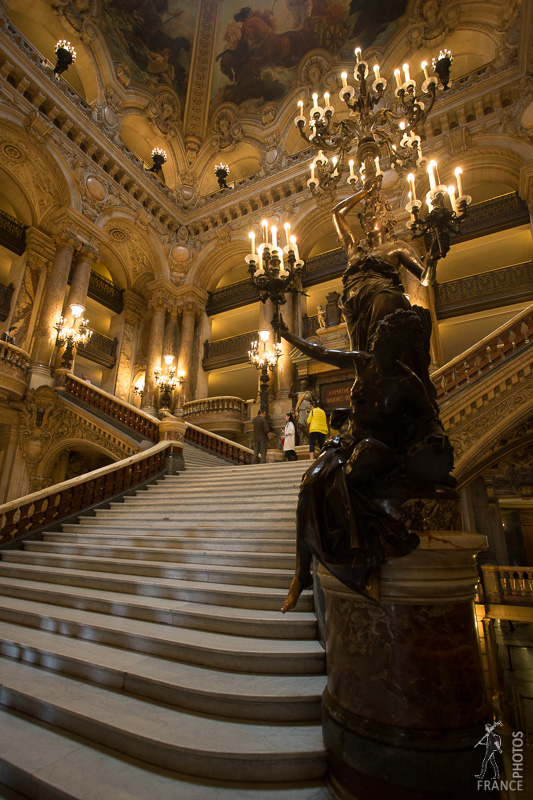
In February 2025, I was able to tour the Palais Garnier. That gilded, grandiose opera house in the heart of Paris that inspired Gaston Leroux’s The Phantom of the Opera. I’d seen the Andrew Lloyd-Webber musical, and I assumed the show’s lush, over-the-top design was an ‘80s theatrical flourish. As I stepped into the real opera house, I realized the Broadway representation wasn’t exaggerated. If anything, it was accurate.
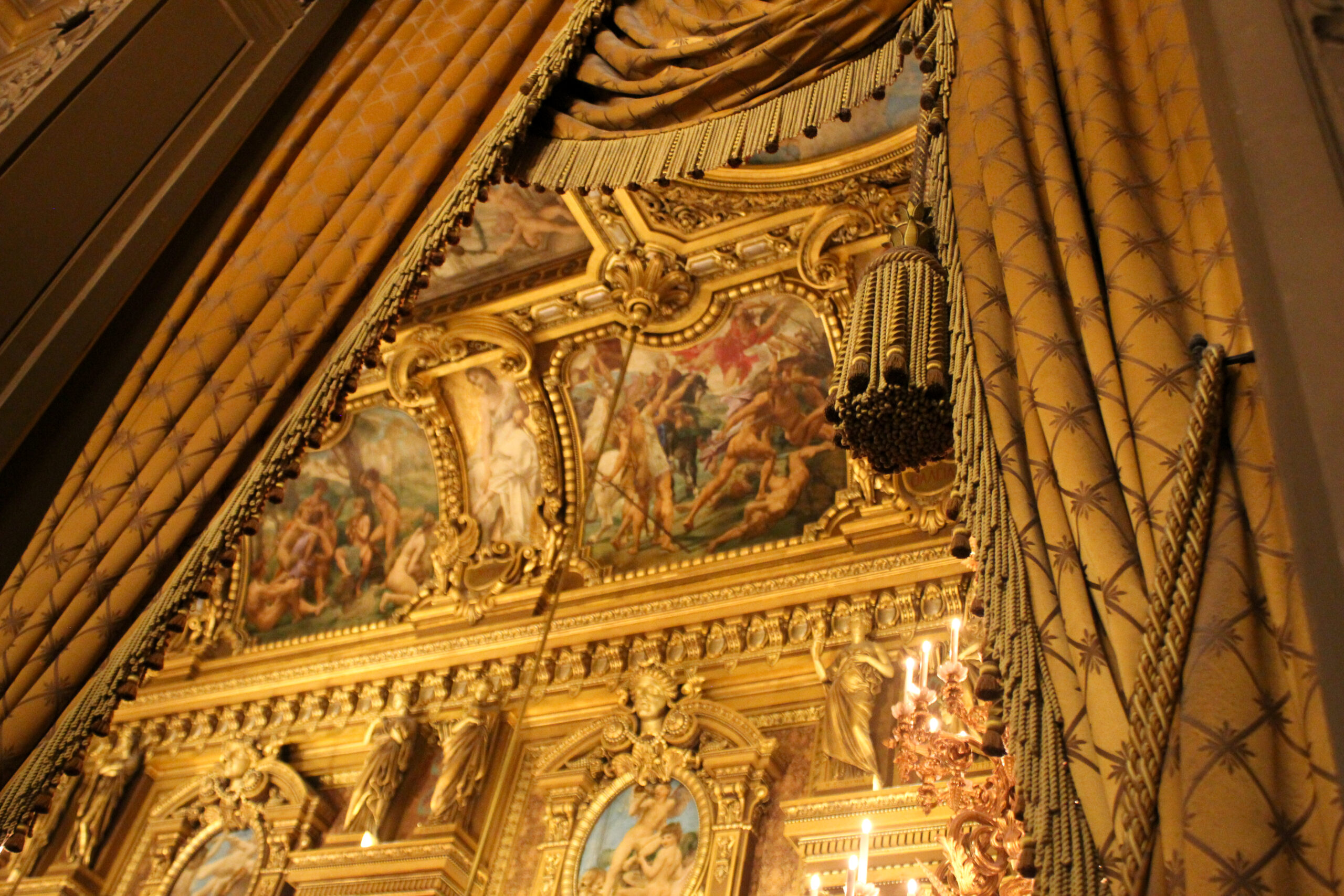
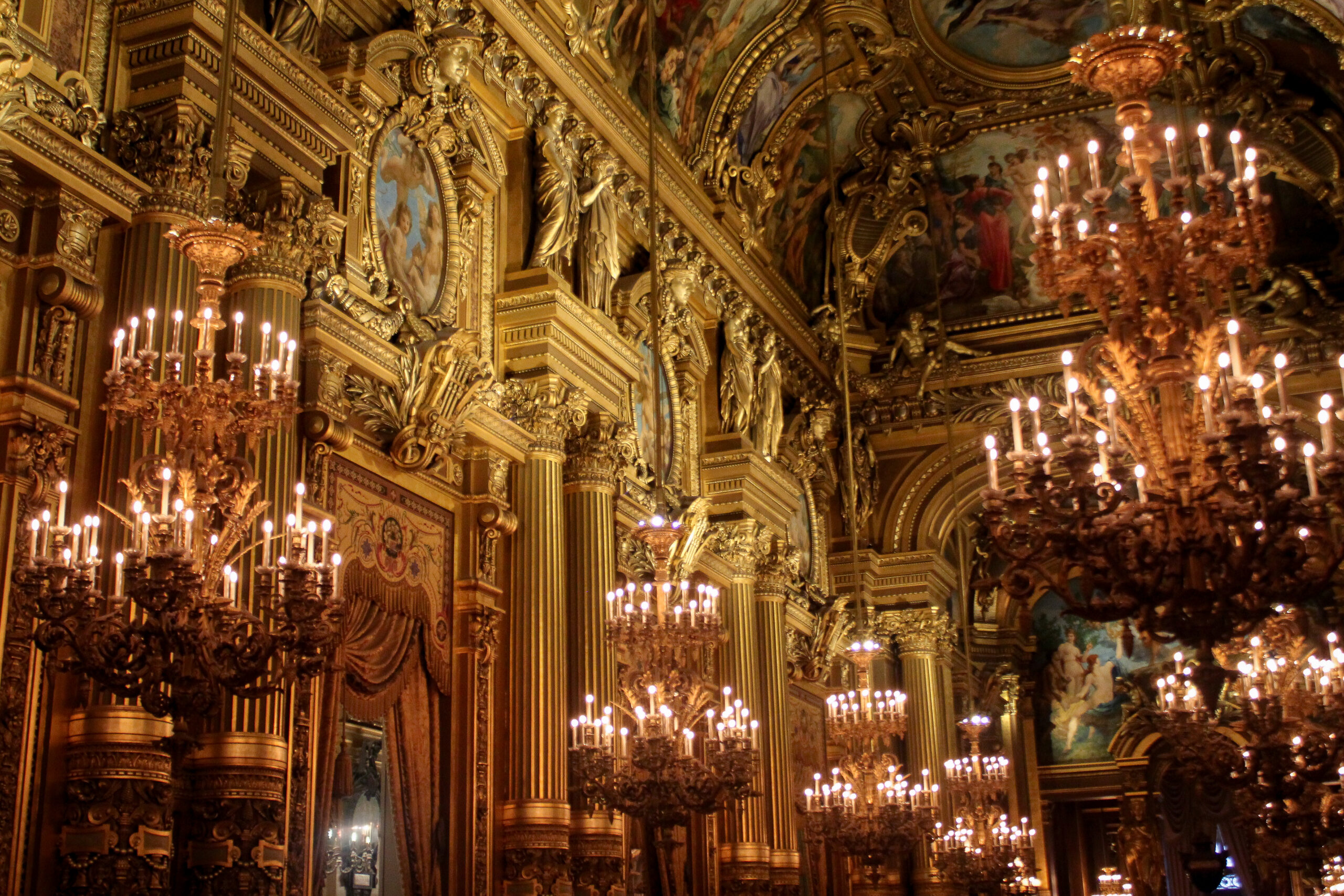
The Palais Garnier opened its doors in 1875, dazzling visitors with richly adorned interiors. Architect Charles Garnier designed it in response to a commission from Emperor Napoleon III. There are naked gold ladies everywhere. Sculpted into balustrades, painted on ceilings, presiding over staircases—every inch designed to impress, overwhelm, and enchant the senses. No wonder it inspired ghost stories.
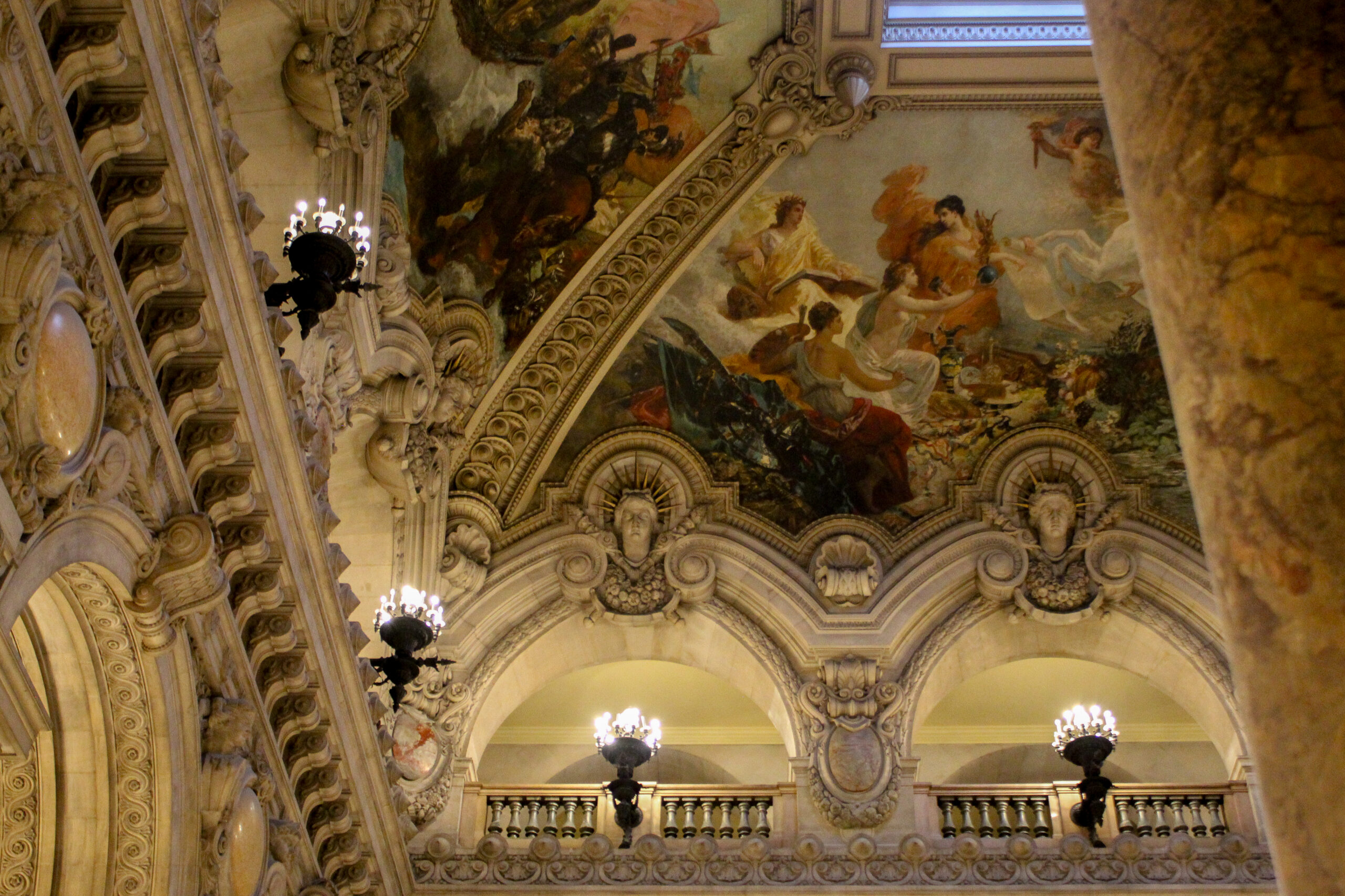
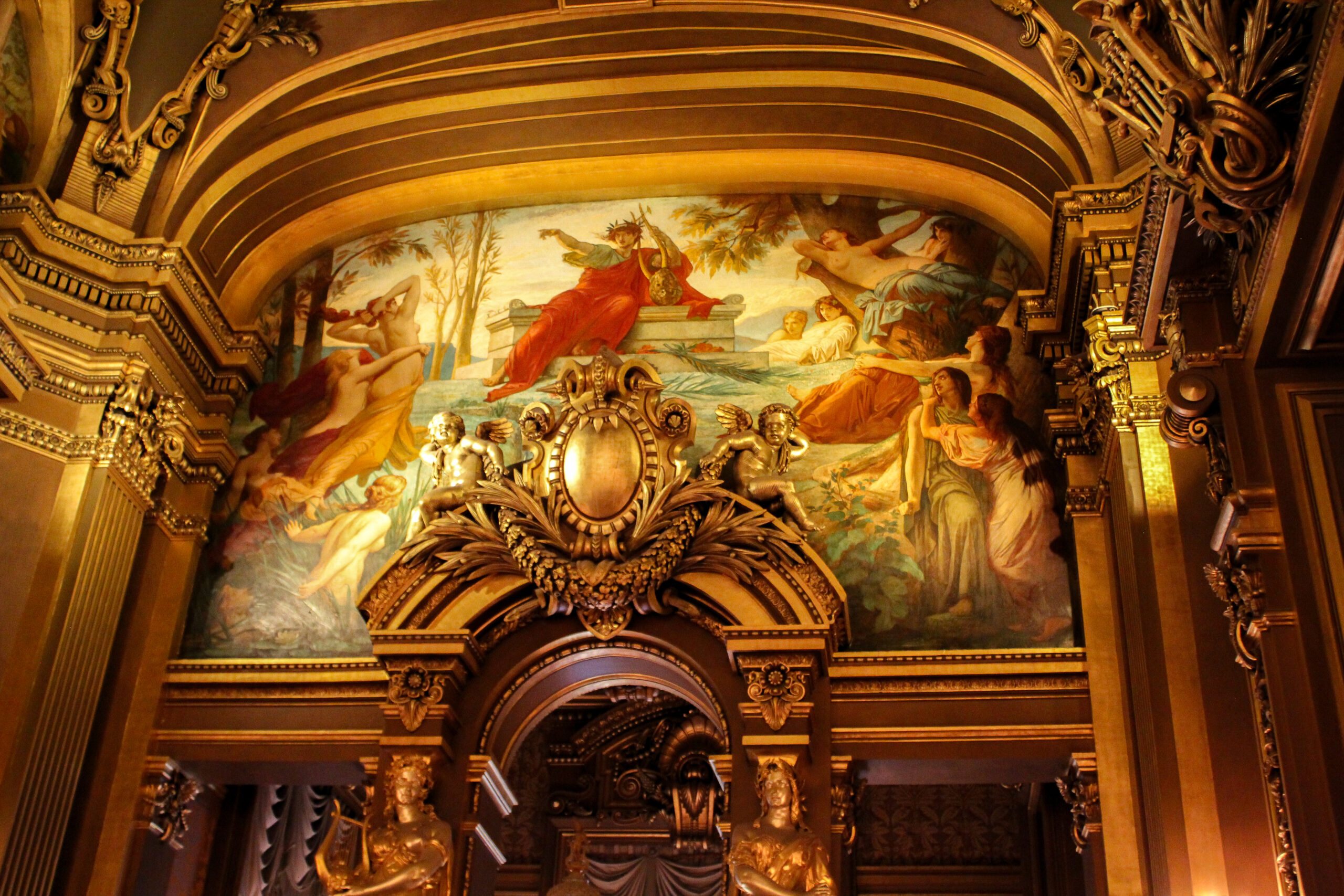
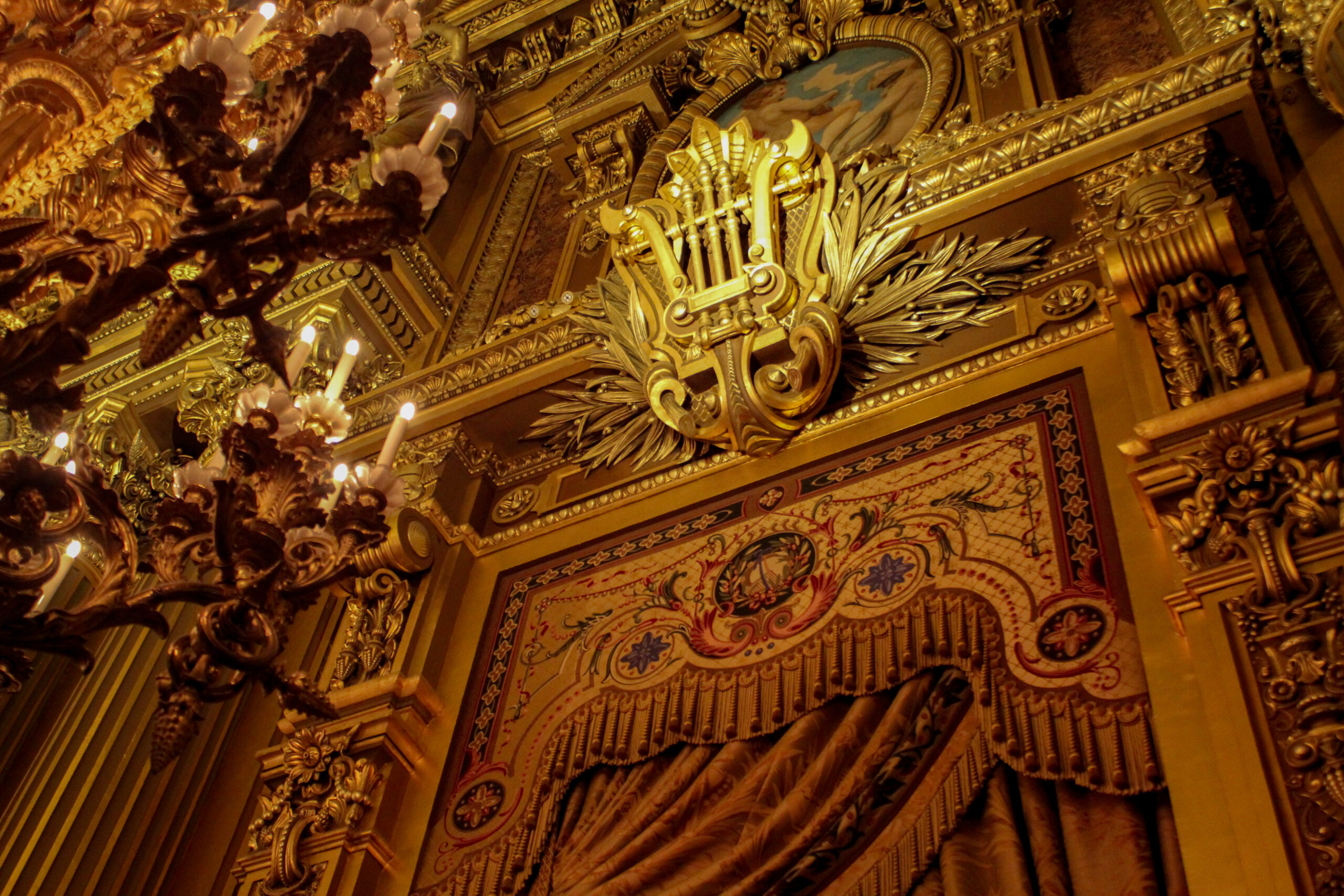
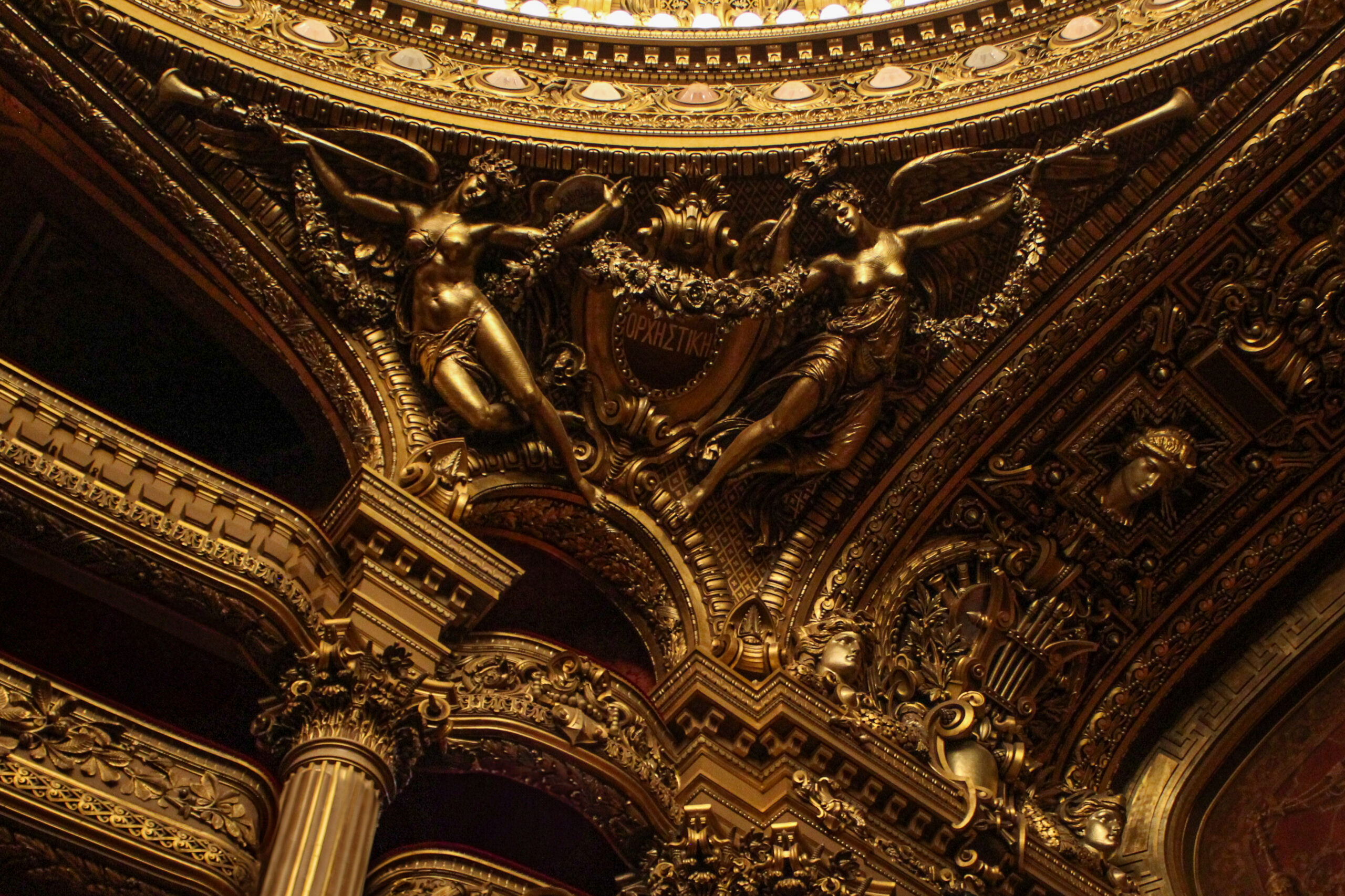
Le Fantôme de l’Opéra de Gaston Leroux
Before The Phantom of the Opera became a global stage phenomenon, it was a strange and moody novel by French writer and journalist Gaston Leroux. First serialized in 1909–1910 in the newspaper Le Gaulois, Le Fantôme de l’Opéra blended gothic horror, mystery, and romance, drawing on real features of the Palais Garnier. Leroux, a former courtroom reporter and theater critic, drew inspiration from his love of architecture, opera, and the hidden secrets beneath grand façades.
Leroux framed his story like a journalistic investigation, claiming that the events were true and that he had uncovered them through archival research and interviews. In the novel, he writes: “The Opera ghost really existed. He was not, as was long believed, a creature of the imagination… Yes, he existed in flesh and blood, although he looked like a corpse.” This metafictional style helped lend credibility to what is essentially a gothic mystery, set in one of the most ornate and theatrical buildings in the world. Though the novel wasn’t an immediate sensation in France, it gained new life in English translation and, later, through film and stage adaptations.
Box Five: Reserved for the Opera Ghost
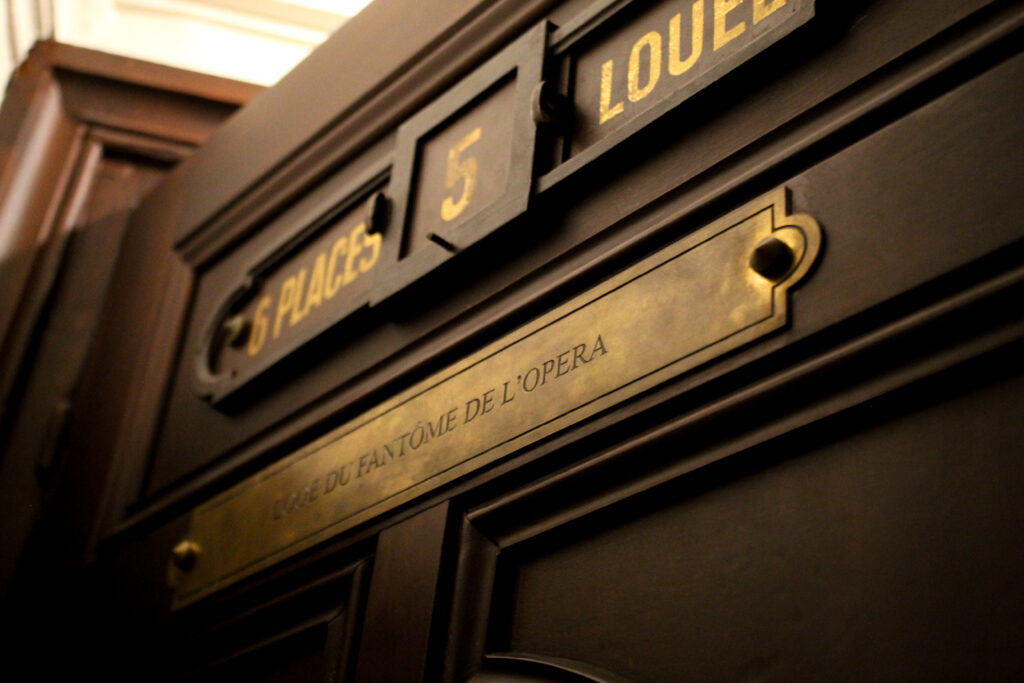
In Gaston Leroux’s The Phantom of the Opera, Box Five is the Phantom’s box. He demands it remain empty, for his personal use. Leroux based this detail on a real box in the Palais Garnier that still exists today. It now bears a plaque declaring that it remains the private box of the Phantom of the Opera.

Andrew Lloyd-Webber’s The Phantom of the Opera Stage Show
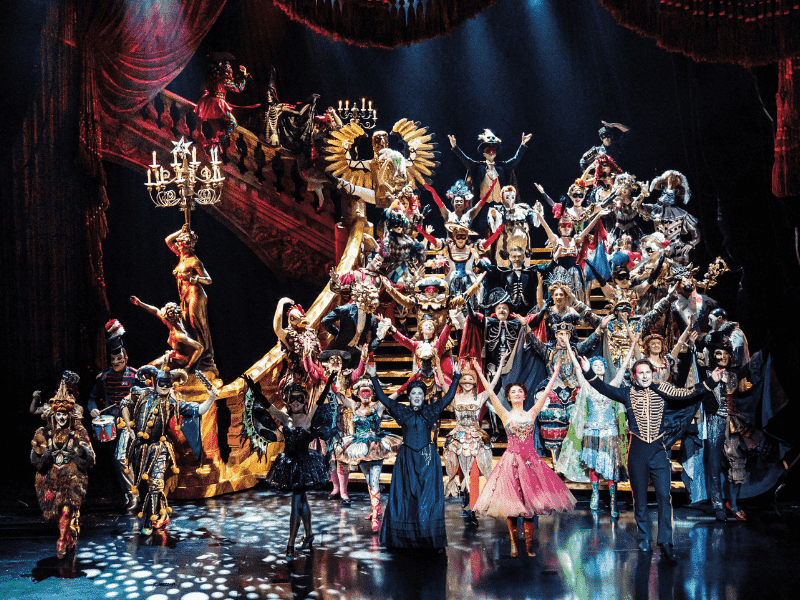
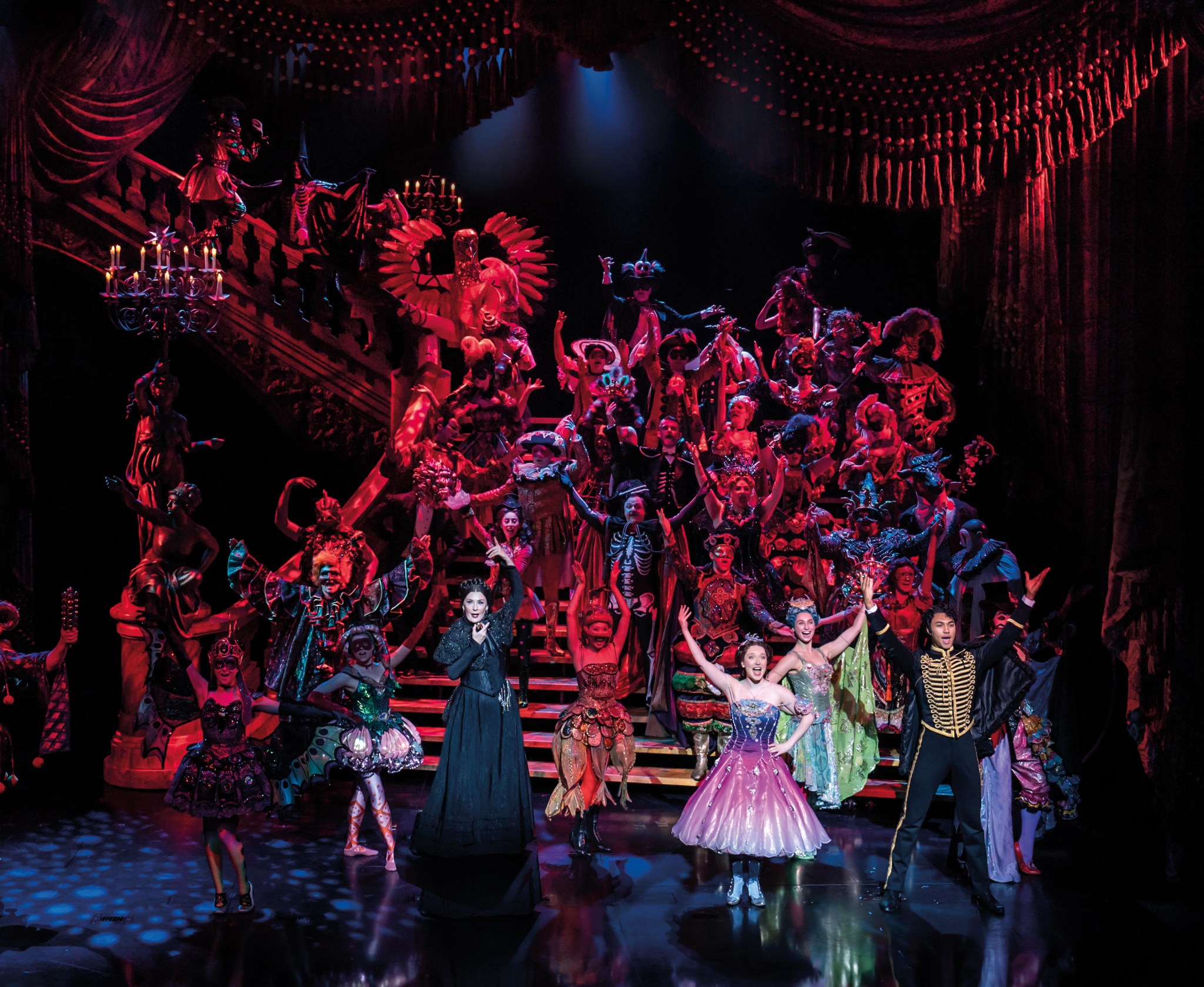
Seeing The Phantom of the Opera on stage in London just before visiting the Palais Garnier gave the whole experience an added layer of déjà vu. The musical’s iconic visuals—the falling chandelier, red velvet drapery, the lavish staircase and thousands of candles—feel like a lavish, theatrical exaggeration. But walking through the actual opera house, I realized just how faithful Andrew Lloyd Webber and his creative team had been. It wasn’t just a spectacle, but the real, opulent bones of the Palais Garnier.
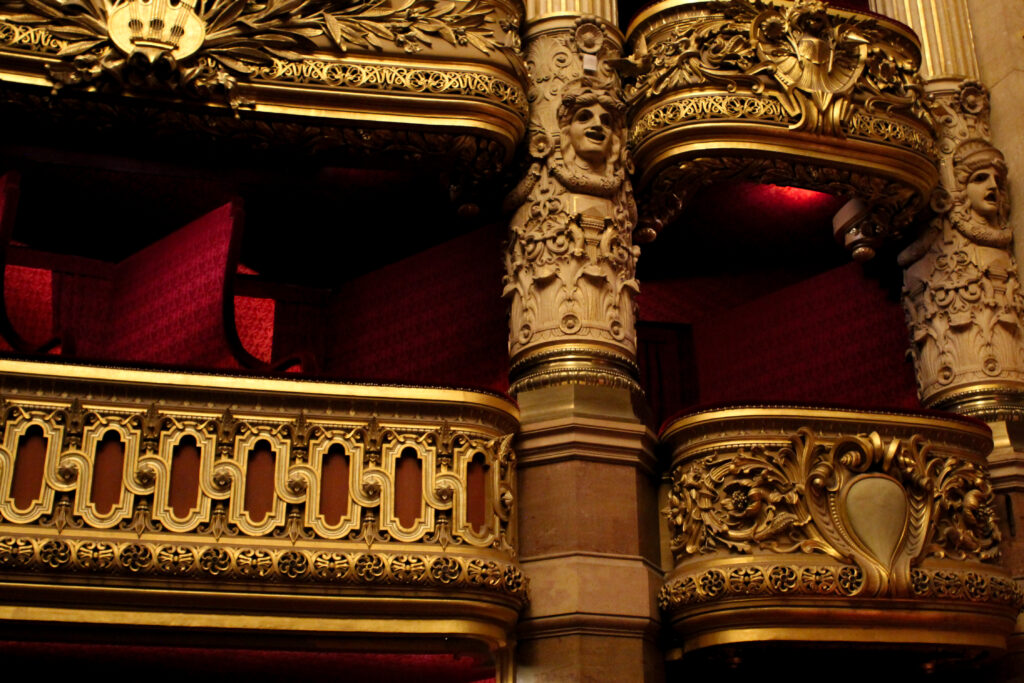
Entering the grand foyer, I could easily imagine the “paper faces on parade” dancing beneath the chandeliers. Opera patrons mingle with actors and chorus girls in a blur of music and masks. The gilded salons and reception halls seemed made for spectacle, alive with the echoes of long-ago galas. I peeked into the red-velvet-lined boxes of the first dress circle—elegant, though curiously uncomfortable. In the auditorium, golden figures watch from above and hold the glittering weight of the great chandelier overhead.
Unfortunately, we couldn’t explore the backstage area or spot the small iron grate above the underground lake. Not part of the tour: Christine’s dressing room and the administrative spaces, like the Manager’s offices. After all, the Palais Garnier is still a working opera house.