I love haunted houses.
Is it a coincidence that I love historic houses?
I love haunted houses. Not just for the chills or cobwebs, but for the depth they hold. At their core, haunted houses are stories about devotion. Someone once loved a place (or someone, or something) so fiercely they never really left. Whether it’s grief, guilt, longing, or rage, a haunted house holds a memory that replays endlessly, like an echo trapped in the architecture. It’s not just spooky—it’s emotional. Human.
It’s also one of the most beloved literary tropes we have. In Gothic horror, especially, the haunted house is more than just a setting. It’s a character. These homes carry the weight of unresolved emotion. The house remembers what the living try to forget.
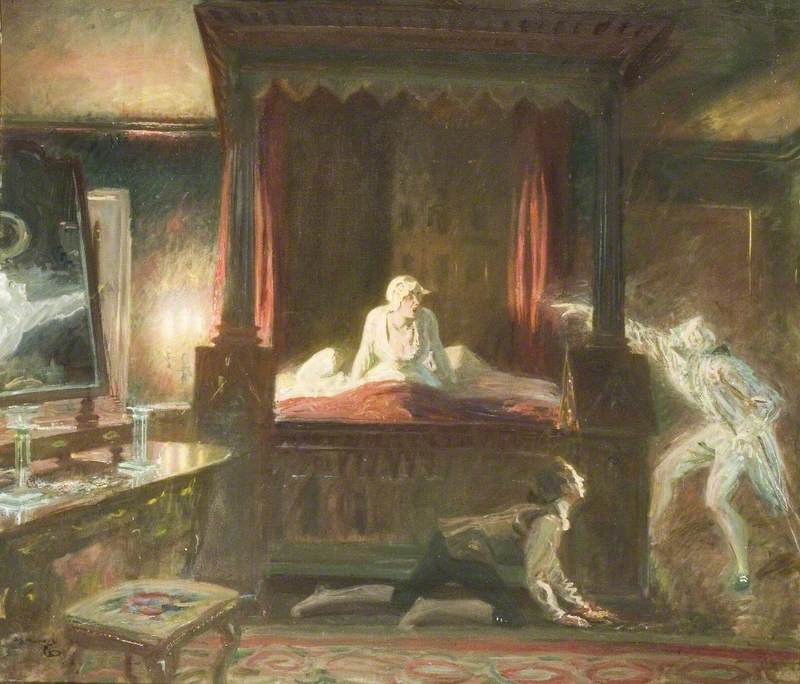
The Haunted Room, 1952.
Alfred James Munnings (British painter)
Courtesy of the Munnings Art Museum.
Every old house is a little haunted.
But not all hauntings are terrifying. Some are gentle, even comforting. They show up in quiet, ordinary moments—walking the hallway at dusk, catching the sound of a floorboard creak, or noticing the light fall just so, and for a second, the veil feels thin. It’s as if another time brushes against the present. Not dramatic. Not frightening. Just… close. Like memory stirred awake.
These are the hauntings I love best—the ones that remind us of how layered a place can be, how the lives lived before us might still hum beneath the surface. They don’t always ask for resolution. Sometimes, they just ask to be noticed.
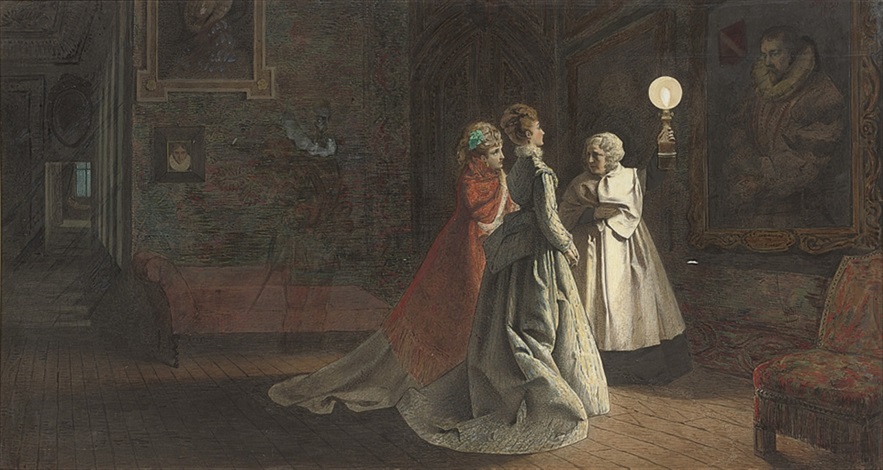
An unexpected addition
to the guided tour
c. 1875
Adelaide Claxton
(British illustrator)
Courtesy of ArtNet
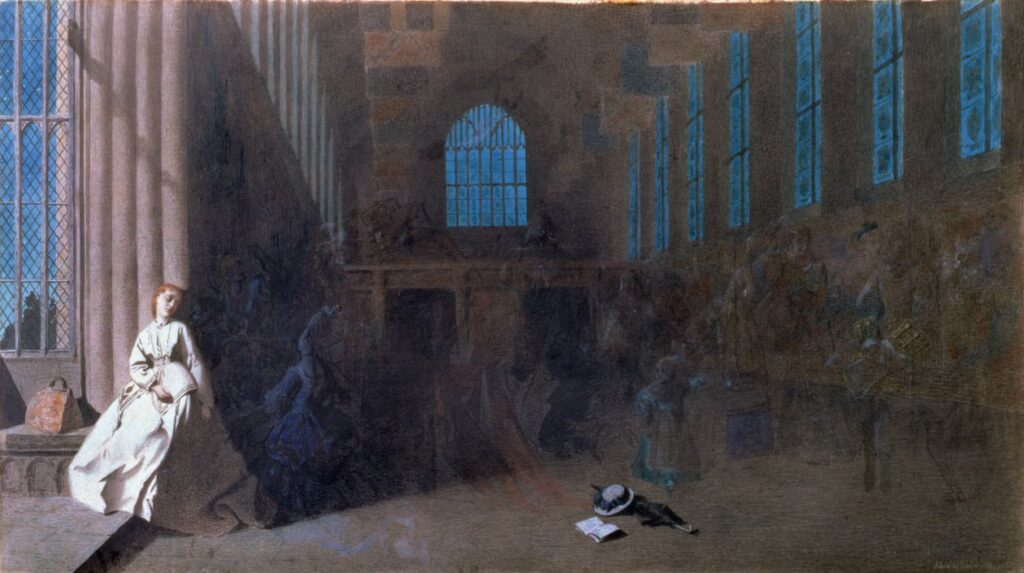
Dreams of the Past,
Hampton Court
c. 1868
Adelaide Claxton
(British illustrator)
Courtesy of Bridgeman
History has its eyes on you.
I often think of the verse Hebrews 12: that we are “surrounded by a great cloud of witnesses.” That phrase has stayed with me over the years, not as something ominous, but as something reverent. A reminder that we are never entirely alone—that the past walks with us, quietly, sometimes invisibly, but undeniably there.
And maybe that’s why haunted houses are often the first step in making a history lover. They introduce us to the idea that history is layered. Emotional. Alive. A ghost story says: someone was here. And somehow, they still are.
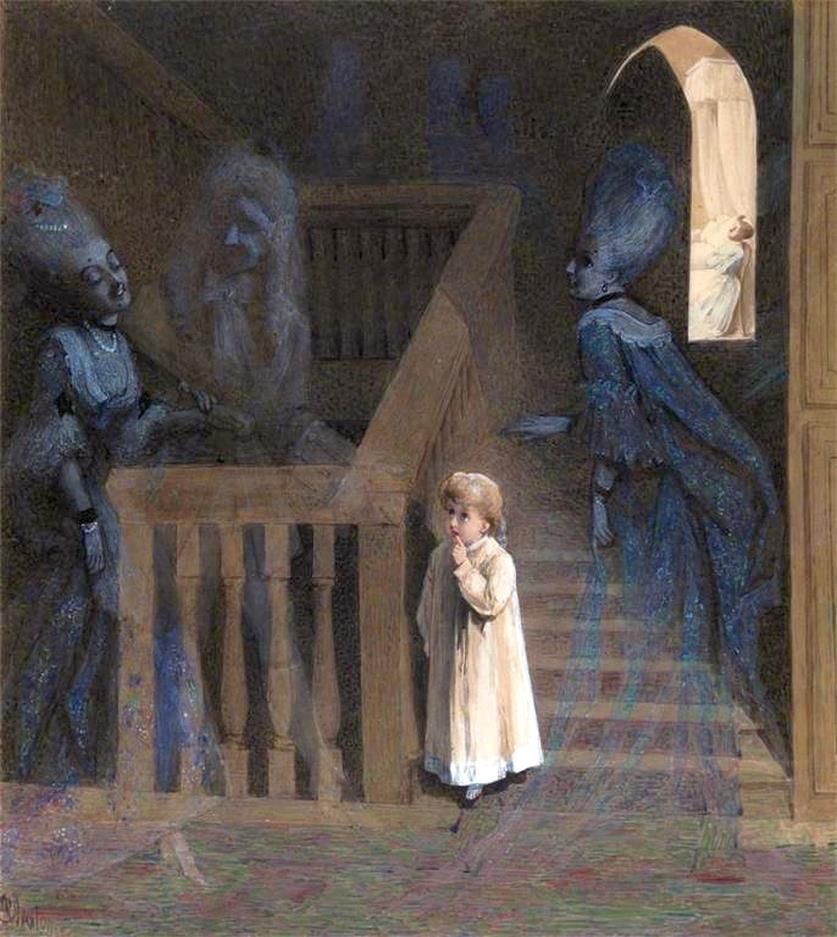

Adelaide Claxton (British illustrator)
Courtesy of the Maas Gallery, London.
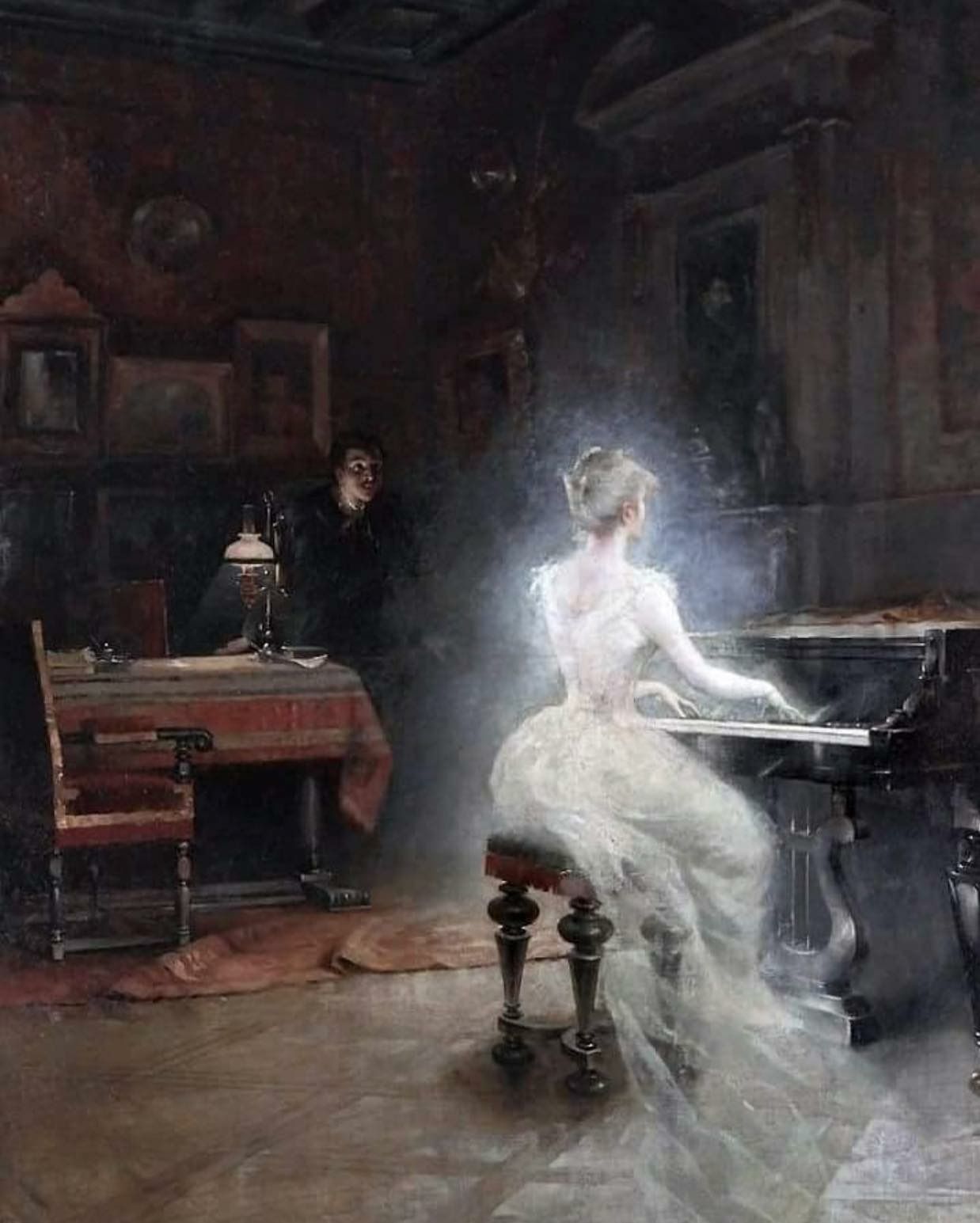

George Roux (French painter)
Courtesy of Wikimedia Commons.
Haunted Houses
from the poem by Henry Wadsworth Longfellow
All houses wherein men have lived and died
Are haunted houses. Through the open doors
The harmless phantoms on their errands glide,
With feet that make no sound upon the floors.
We meet them at the door-way, on the stair,
Along the passages they come and go,
Impalpable impressions on the air,
A sense of something moving to and fro.
There are more guests at table than the hosts
Invited; the illuminated hall
Is thronged with quiet, inoffensive ghosts,
As silent as the pictures on the wall.
The stranger at my fireside cannot see
The forms I see, nor hear the sounds I hear;
He but perceives what is; while unto me
All that has been is visible and clear.

Do You Believe in Haunted Houses?
Have you ever visited a haunted house—or worked in one? Which one stayed with you, and why? I’d love to hear your story.