The Women Who Followed the Army
In October 2025, the Bidwell House Museum in Monterey, Massachusetts, hosted its second Army on Campaign living history event. The weekend featured two conjectural woodland skirmishes and encampments representing military units on campaign during the American Revolution.
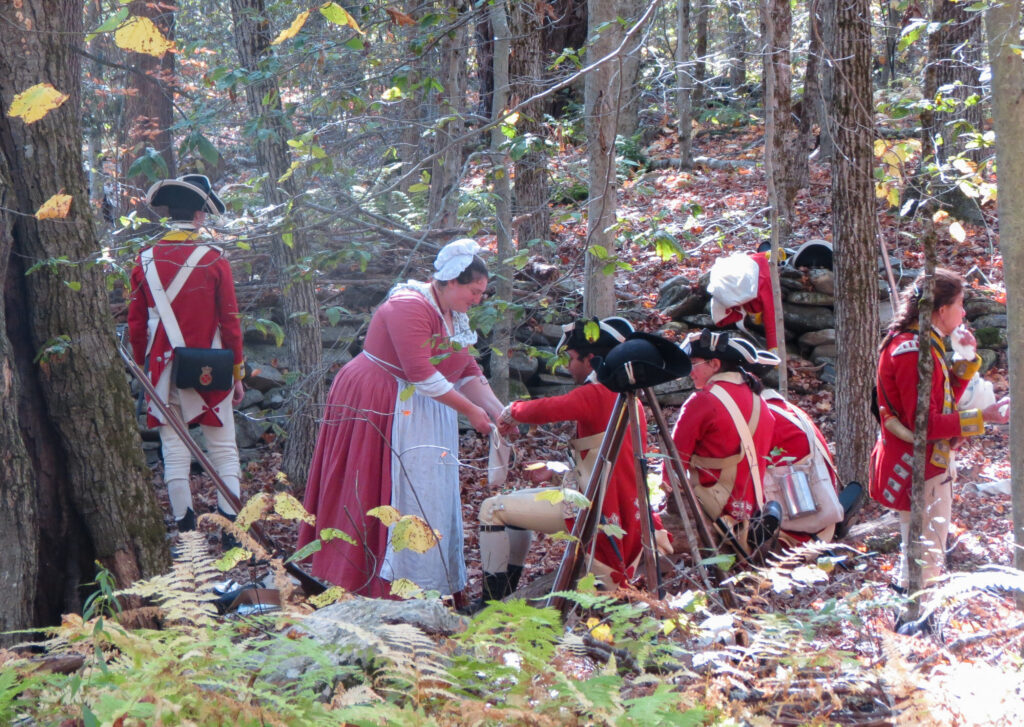
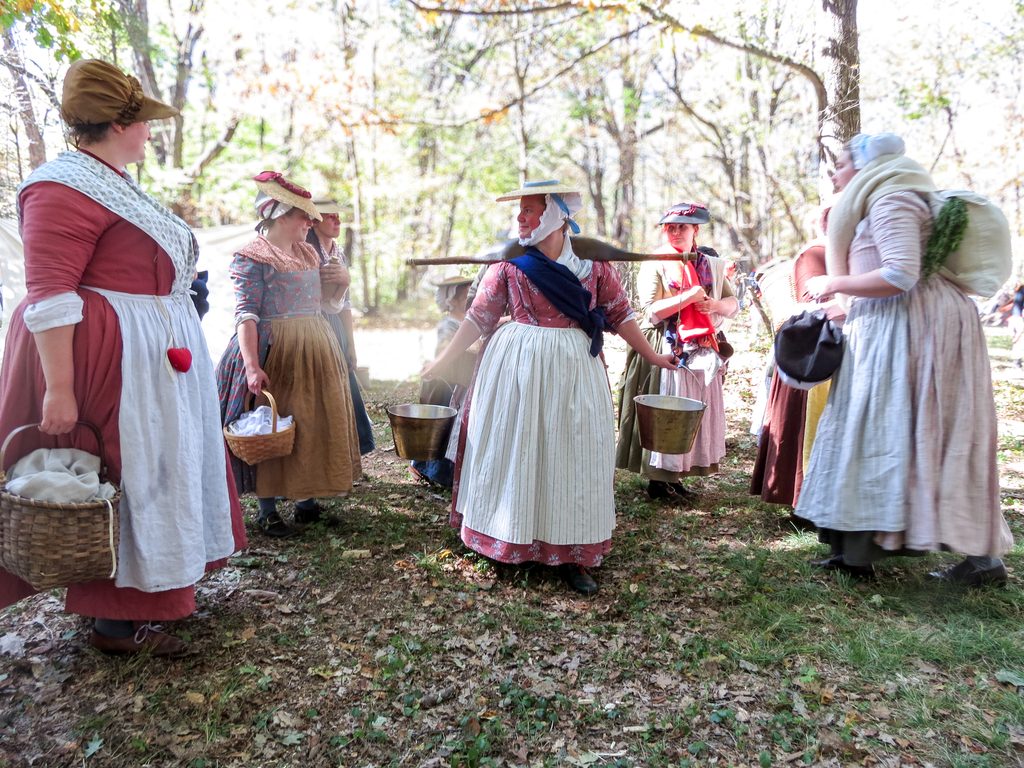
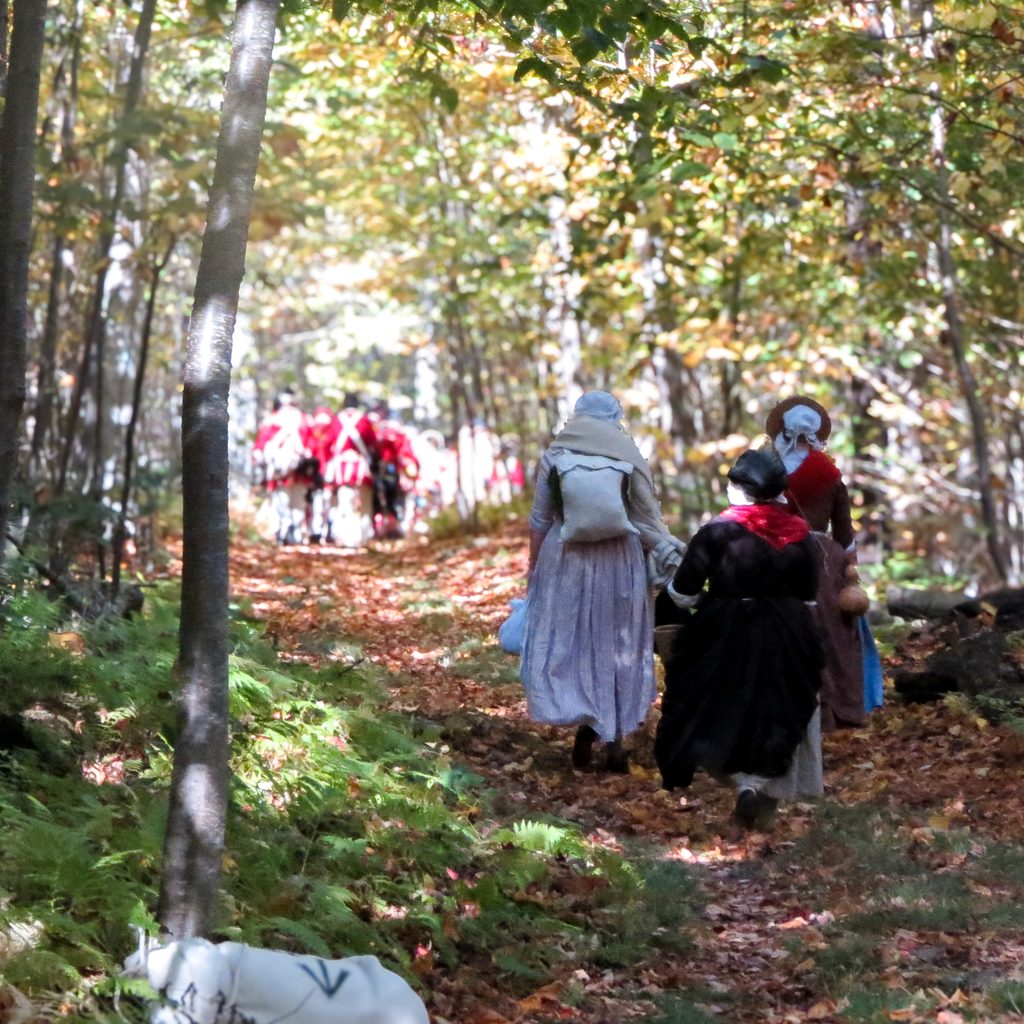
Alongside the soldiers were the people who helped keep the army moving. Women, children, and non-military men traveled with the troops, forming a vital support network beyond the enlisted ranks. These camp followers were integral to the event, highlighting the often-overlooked labor and daily experiences that accompanied military life.
Beyond the Ranks
Eighteenth-century armies rarely traveled with soldiers alone. Camp followers included enlisted men’s wives and children, women displaced by the war, and people seeking wages, food, or relative security amid widespread hardship. Some women held recognized roles as laundresses, nurses, cooks, or seamstresses. Others worked as petty sutlers, selling goods to soldiers.
Many of these responsibilities were essential to an army’s daily operations. Clothing needed washing and mending, the sick needed care, and soldiers required food and other necessities. Civilians could be formally attached to the army, or on the strength, making them eligible for wages and rations in exchange for their work.
At Bidwell, followers associated with both military units—and individual reenactors portraying civilians—helped bring these varied experiences into view. Their presence offered a glimpse of camp life beyond drills, uniforms, and skirmishes.
Seeing the Army Through Its Followers
The camp followers at Bidwell offered a different perspective on military life during the American Revolution. Their experiences remind us that armies depended on more than the people carrying weapons. They also relied on the labor, resourcefulness, and resilience of civilians whose lives war disrupted.
Photographing these reenactors let us look beyond military action and consider the people who accompanied it. Their work, possessions, and daily routines help make visible a dimension of Revolutionary-era life that can easily disappear behind the spectacle of a battlefield.
The Army on Campaign event invited visitors to consider not only how soldiers fought, but also how an army lived—and the many people whose work made that life possible.
More from Bidwell on Campaign
The event also featured lectures, a tavern talk by Brandyn Charlton, and a presentation by Emma Cross on the life of Baroness Frederika Riedesel.