• Skip to primary navigation
  • Skip to main content
  • Skip to primary sidebar
  • Skip to footer
Everhart Creative
  • Blog
  • Photography
    • Testimonials
  • Social Media
  • About
Home » Blog » Heritage Animals at Claude Moore Colonial Farm

Heritage Animals at Claude Moore Colonial Farm

September 12, 2026 by Clara Everhart

Reading Time: 3 minutes

The 18th-Century Virginia Farm

At Claude Moore Colonial Farm, the animals were more than a charming part of the landscape. They were part of the farm’s interpretation of 18th-century agricultural life. The heritage animals at Claude Moore Colonial Farm helped visitors consider how livestock, farming practices, and household economies shaped daily life in the colonial Chesapeake.

Claude Moore Colonial Farm (National Park Service’s Turkey Run Park in McLean, Virginia) was a living history farm dedicated to portraying the everyday life of tenant farmers around 1771. It operated from 1973 to 2018. To portray colonial farm life, the farm offered hands-on experiences centered on historic farming, homesteading, and farm animals. You can see more of my favorite photos of the farm and its interpreters in this blog post.
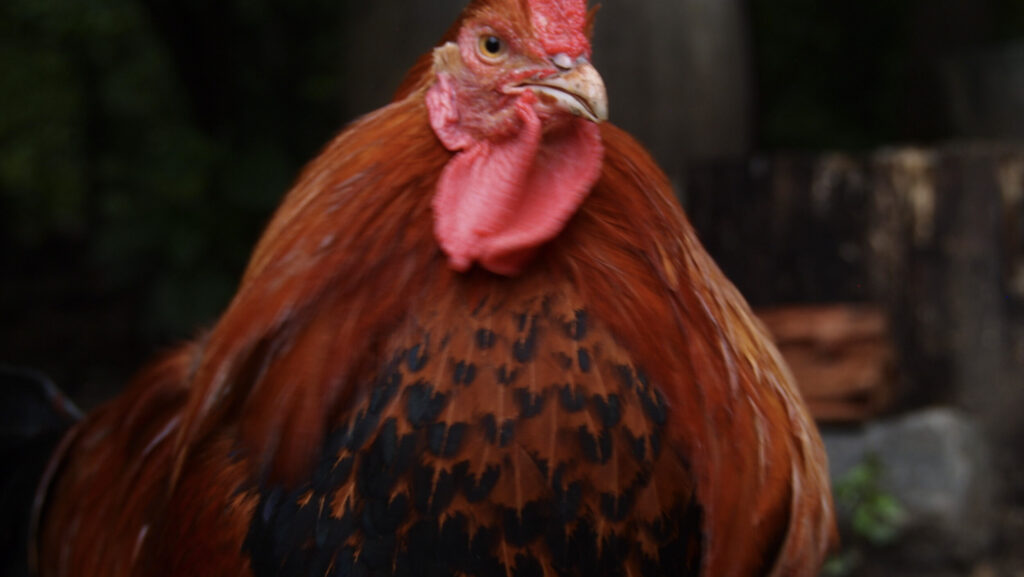
Gentleman Rooster, a heritage-breed Welsummer chicken at Claude Moore Colonial Farm, McLean, VA. 2018.
Gentleman Rooster, a heritage-breed Welsummer chicken.
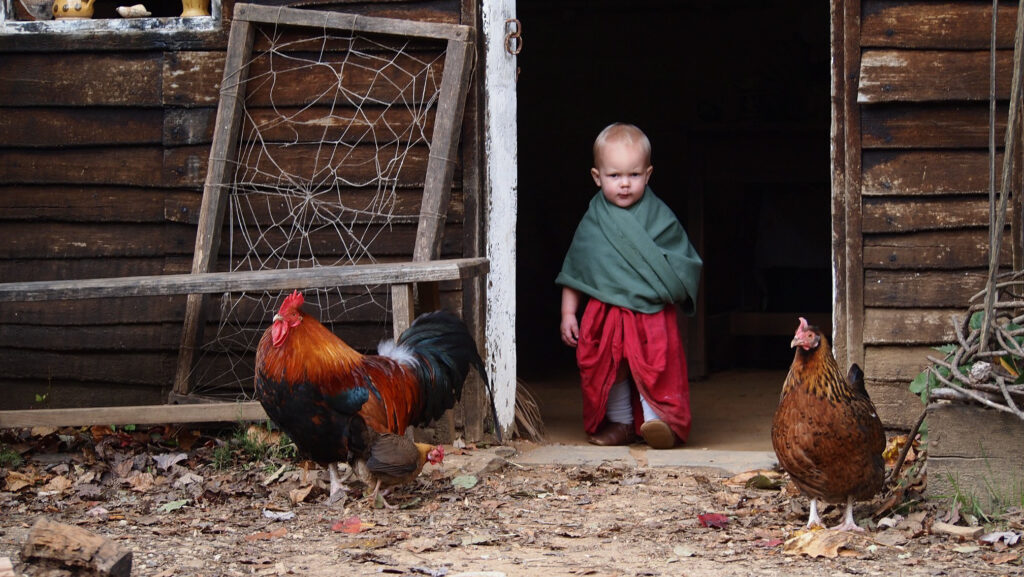
Young Justice in the farmhouse door, with two chickens, at Claude Moore Colonial Farm, McLean, VA. 2018.
Young Justice in the farmhouse door, with two chickens.
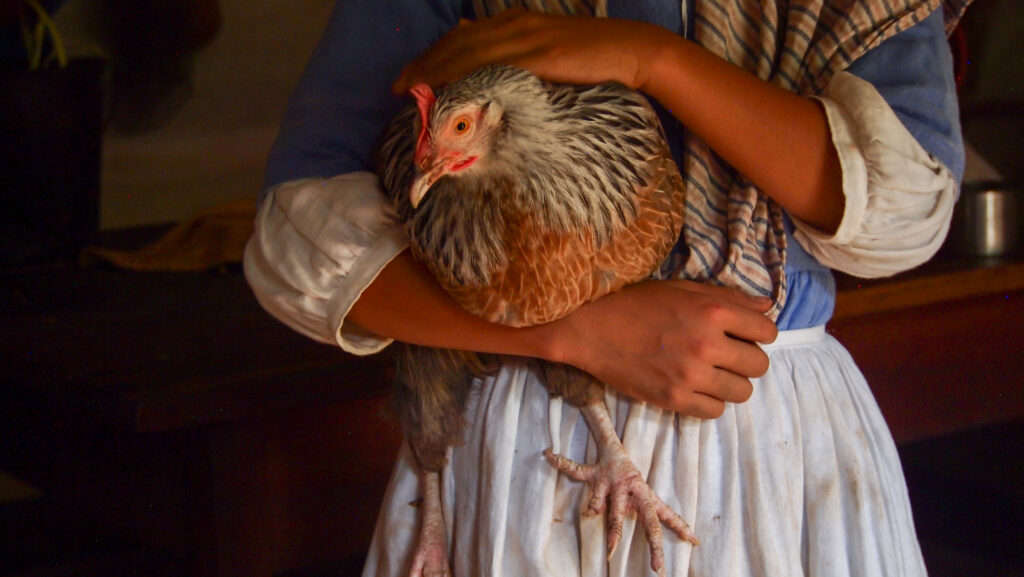
The Favorite, a heritage-breed Dorking hen held by a young woman at Claude Moore Colonial Farm, McLean, VA. 2018.
The Favorite, a heritage-breed Dorking hen held by a young interpreter.

Heritage Livestock and Native Species

The farm raised heritage-breed livestock, preserving breeds with historical ties to the animals kept by earlier generations of farmers. Unlike modern commercial breeds, heritage breeds often retain characteristics that made them useful in earlier agricultural systems. These include hardiness, foraging ability, and suitability for small-scale farming.

In 2018, the farm kept a variety of heritage-breed chickens, Bronze turkeys, Red Devon cows, and Ossabaw hogs. In years past, it maintained a horse and flocks of geese and sheep.
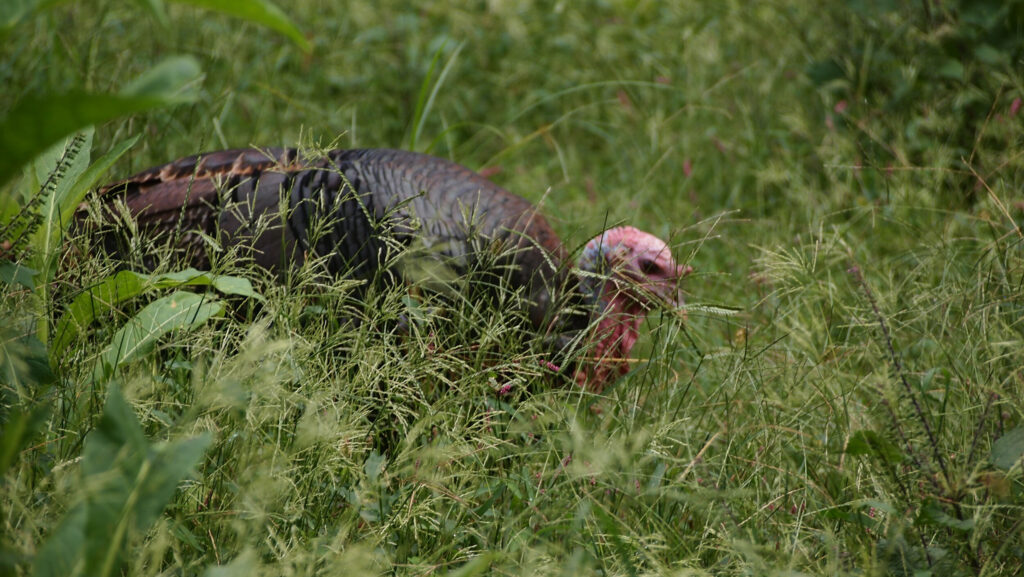
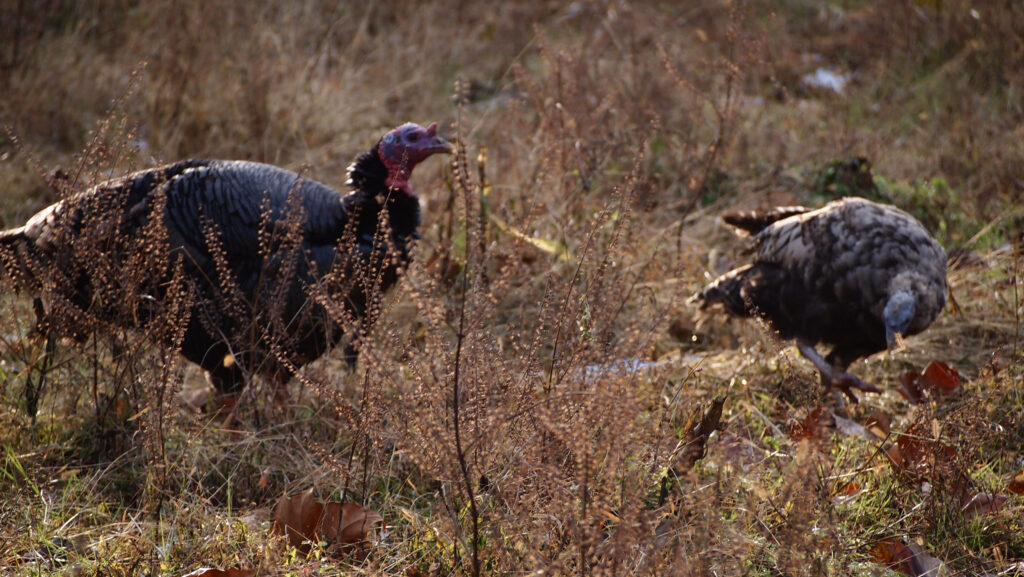
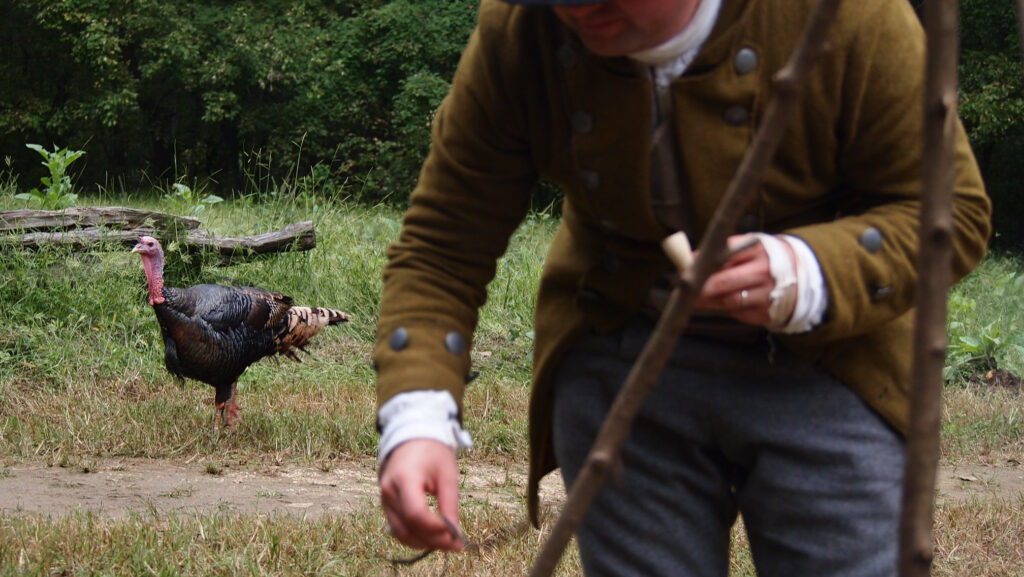
Tom, a heritage-breed Bronze turkey, at work eating insects at Claude Moore Colonial Farm, McLean, VA. 2018.
Tom, a heritage-breed Bronze turkey, at work eating insects.
Two heritage-breed Bronze turkeys at Claude Moore Colonial Farm, McLean, VA. 2018.
Two heritage-breed Bronze turkeys.
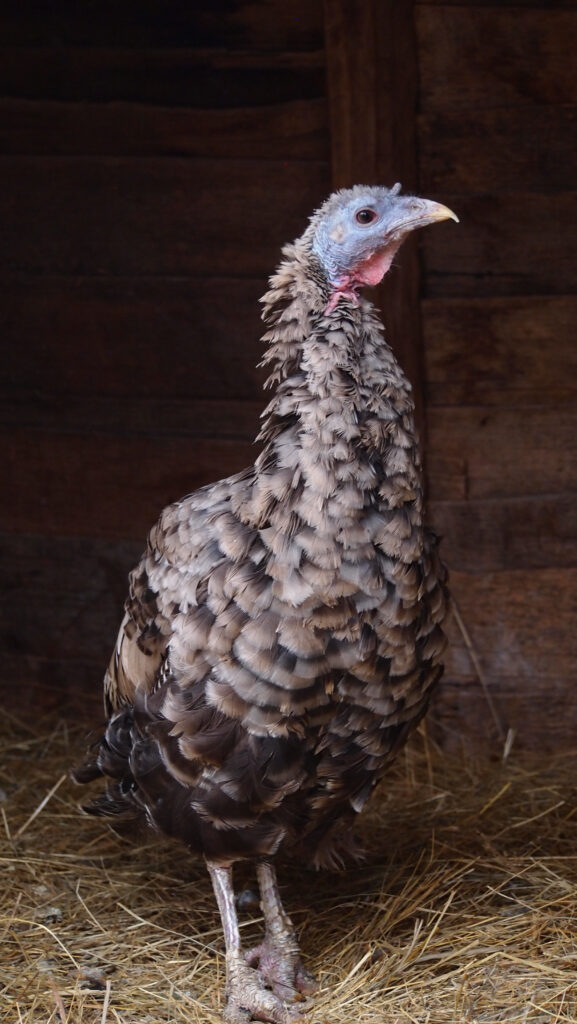
The Grand Dame, an elderly  heritage-breed Bronze turkey at Claude Moore Colonial Farm, McLean, VA. 2018.
The Grand Dame, a long-lived heritage-breed Bronze turkey.
Tom, a heritage-breed Bronze turkey, surveying the muster at Claude Moore Colonial Farm, McLean, VA. 2018.
Tom, a heritage-breed Bronze turkey, surveying the muster at Claude Moore Colonial Farm, 2018.

Redefining “Living History”

Seeing these animals in a working historic landscape also adds context that objects and buildings alone can’t convey. Livestock required food, shelter, care, breeding, and labor. Their presence connects the farm’s gardens, fields, barns, kitchens, and households into a larger story about work and survival.

For photographers and history enthusiasts, the animals also offer an opportunity to examine the material and sensory details of a historic farm. A heritage breed standing in an 18th-century-inspired landscape can become a starting point for thinking about agriculture, labor, technology, and the people whose work sustained these communities.
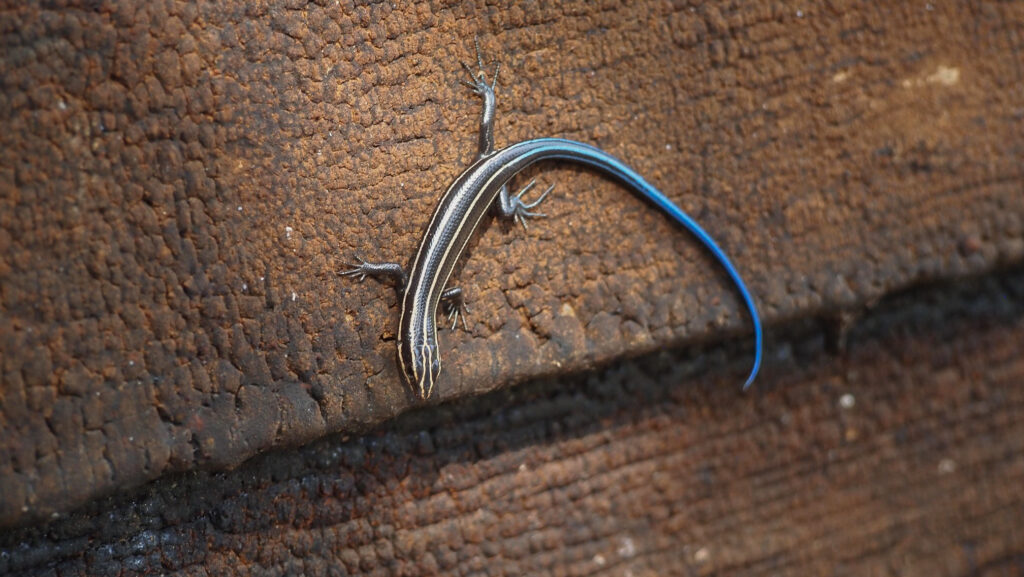
Juvenile five-lined skink sunning on the farmhouse's exterior siding at Claude Moore Colonial Farm, McLean, VA. 2018.
Juvenile five-lined skink sunning on the farmhouse’s exterior siding.
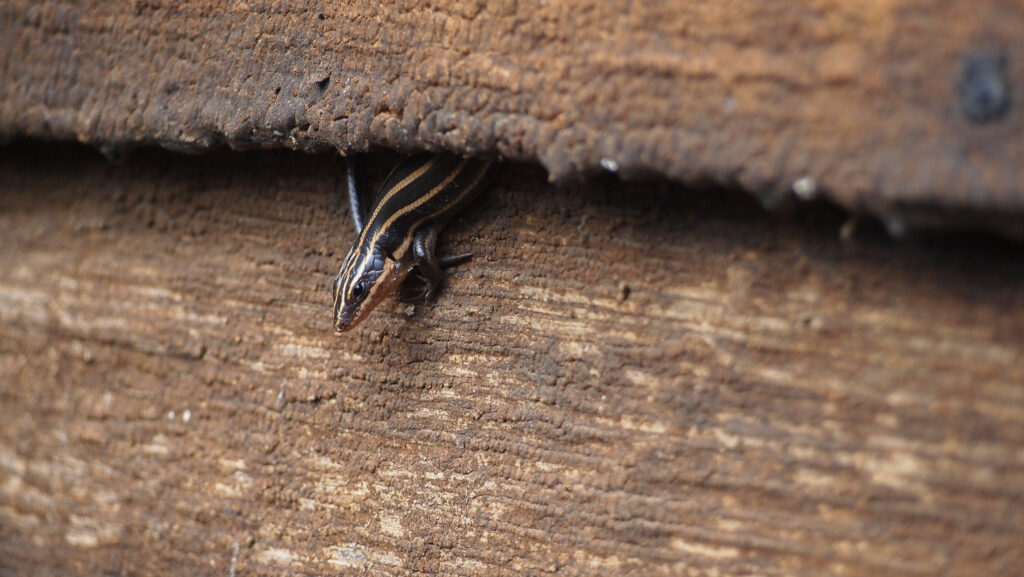
Juvenile five-lined skink hiding in the farmhouse's exterior siding at Claude Moore Colonial Farm, McLean, VA. 2018.
Juvenile five-lined skink hiding in the farmhouse’s exterior siding.
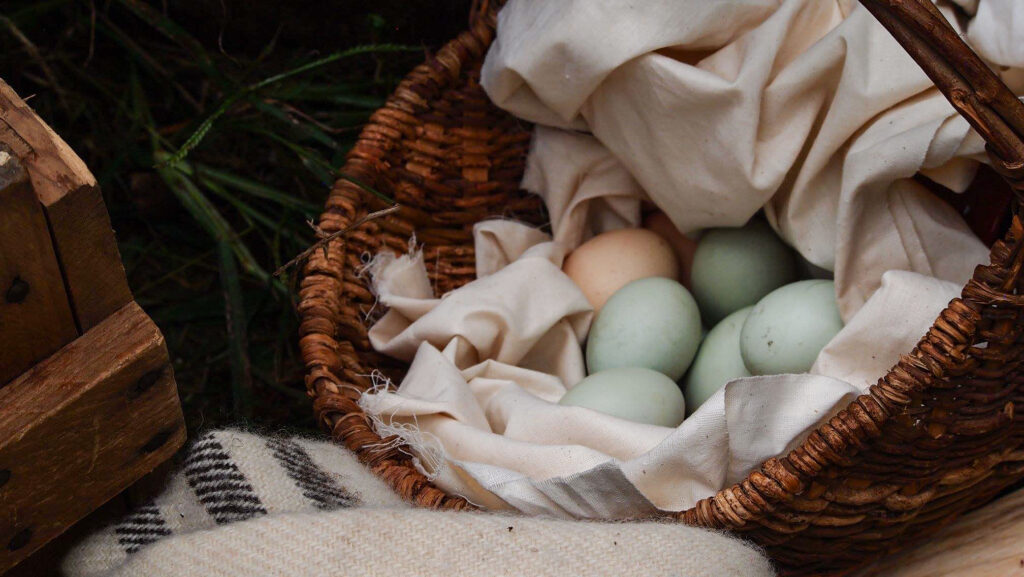
Colorful chicken eggs in a basket at Claude Moore Colonial Farm, McLean, VA. 2018.
Colorful chicken eggs in a basket.
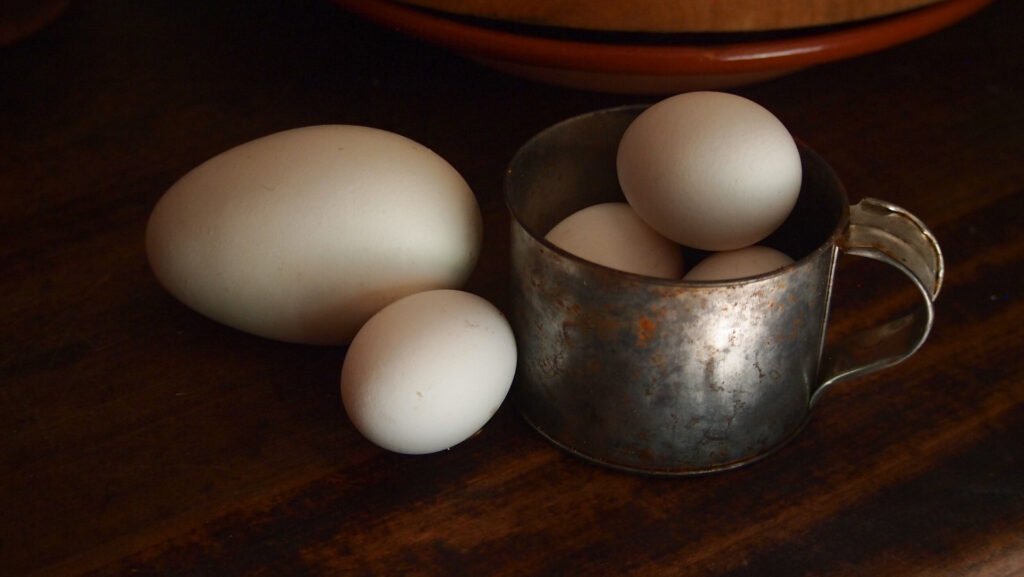
Goose and chicken eggs in a tin cup  at Claude Moore Colonial Farm, McLean, VA. 2018.
Goose and chicken eggs in a tin cup.

Filed Under: Living History, Photography Tagged With: Claude Moore Colonial Farm

Recent Posts

  • Bobbin Lace Making at Bidwell
  • Heritage Animals at Claude Moore Colonial Farm
  • Whitney Plantation
  • What’s a Flying Hospital?
  • 250th at Fort Ticonderoga
Previous Post: « Whitney Plantation
Next Post: Bobbin Lace Making at Bidwell »

Primary Sidebar

Let’s Connect

  • Email
  • Facebook
  • Instagram
  • LinkedIn

About the Artist

Clara Everhart is a photographer, blogger, and digital communications specialist passionate about how we interpret history. Read more.

Footer

  • Cookie Policy
  • Disclosure & Privacy Policy
  • Email
  • Facebook
  • Instagram
  • LinkedIn

Copyright © 2026 Everhart Creative on the Foodie Pro Theme