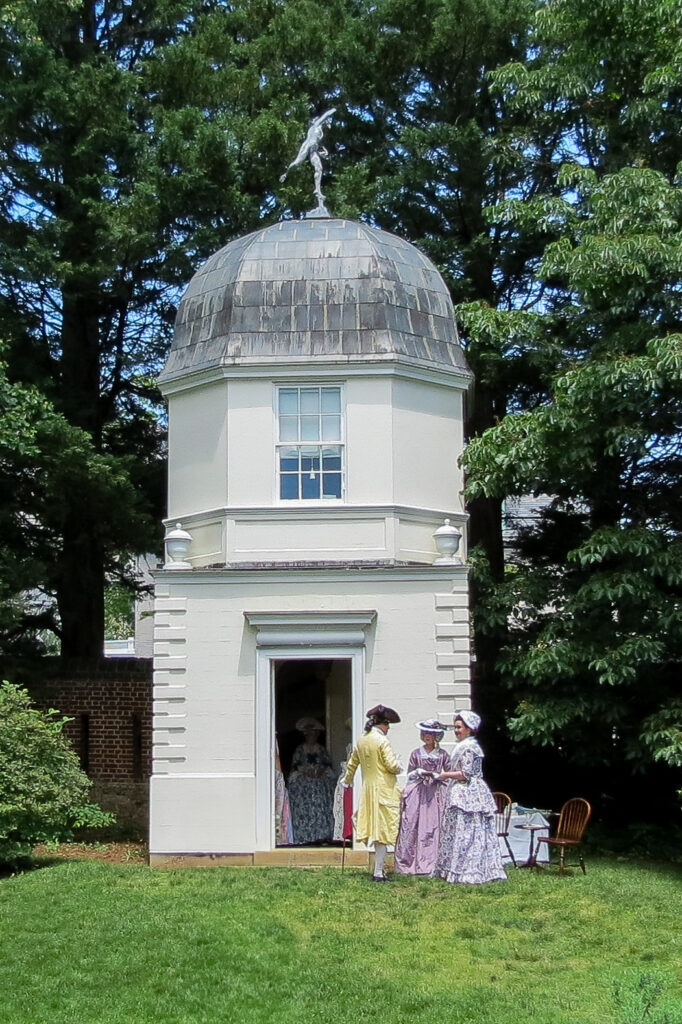
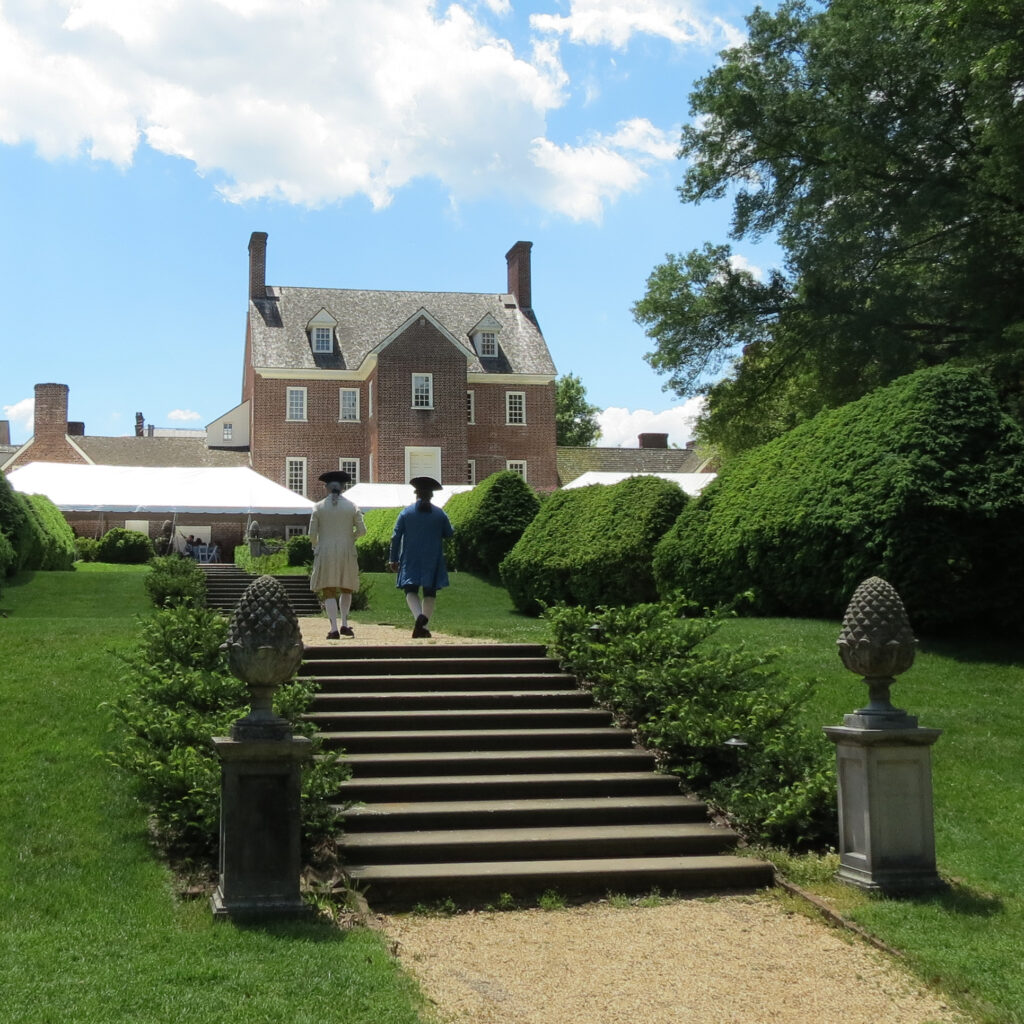
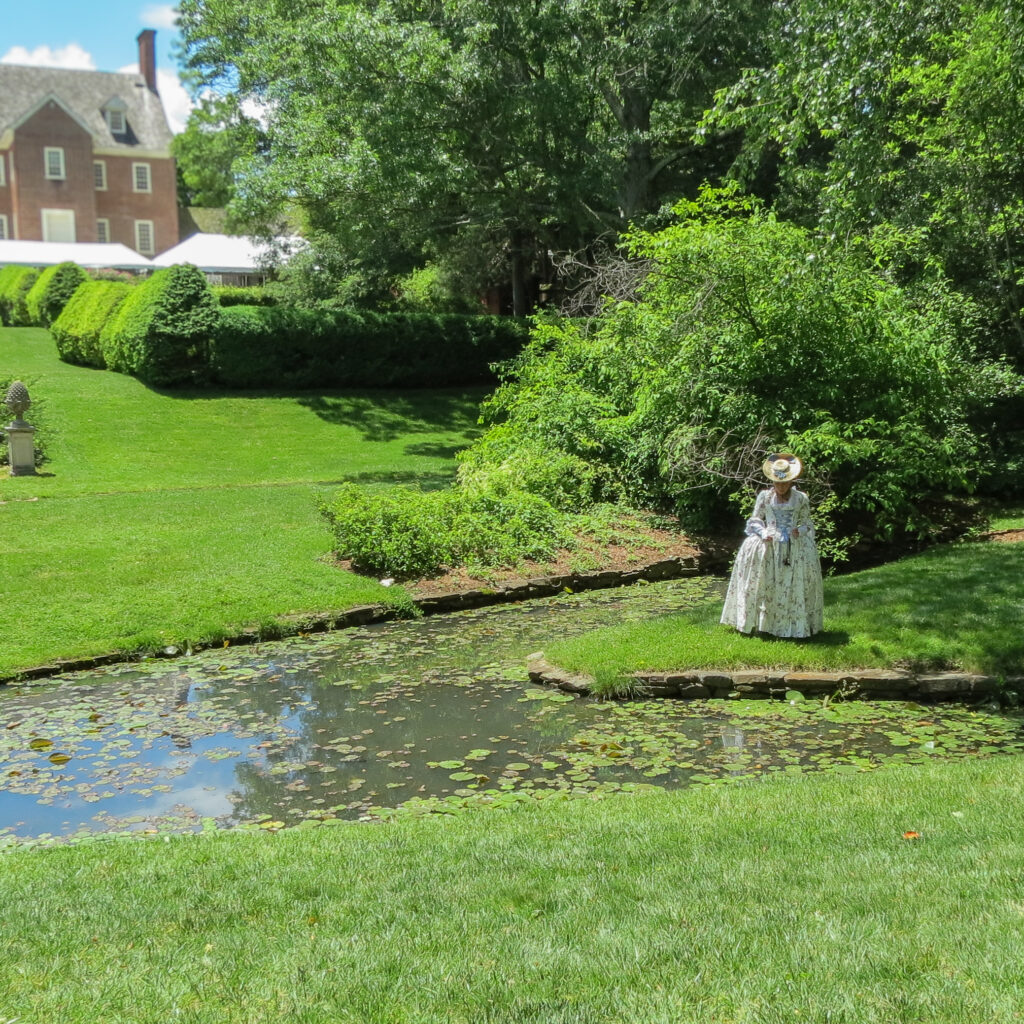
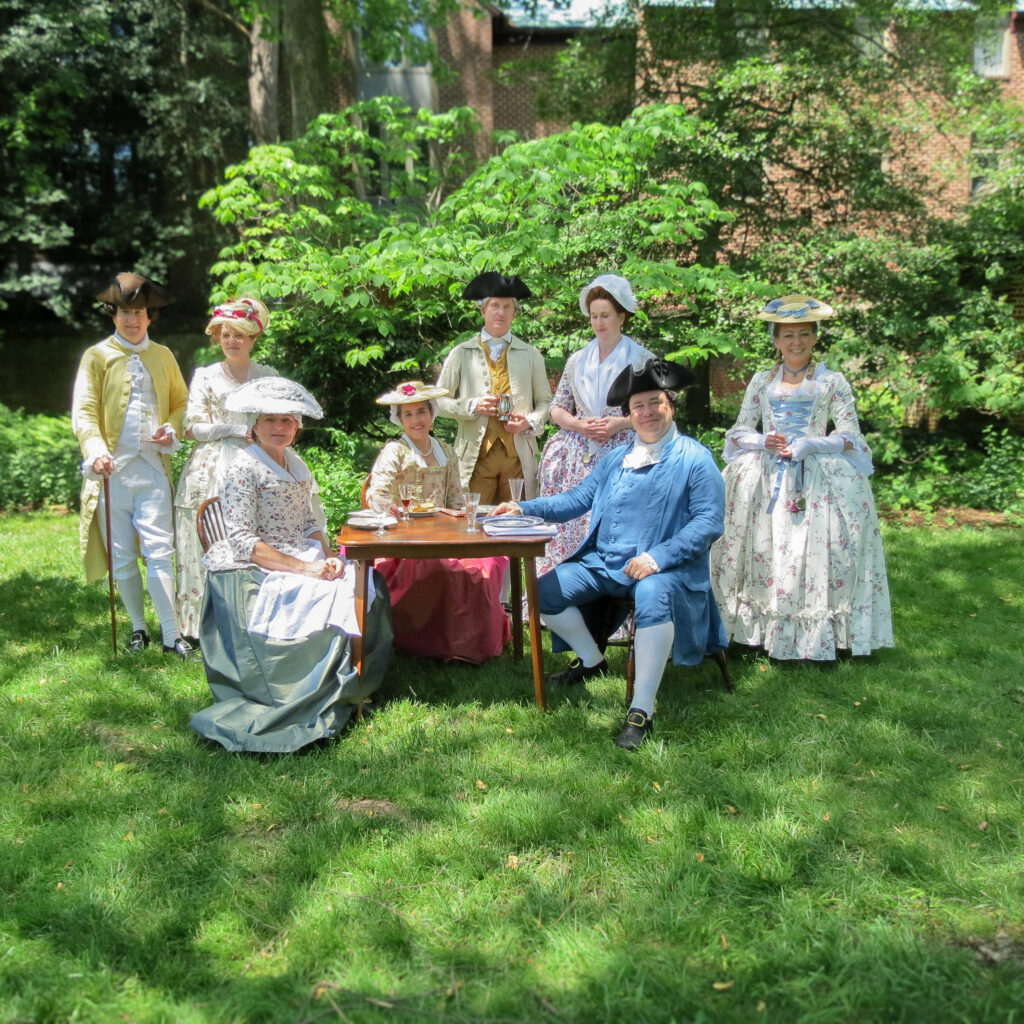
On May 18, 2025, the Annapolis Living Historians hosted a garden party at the William Paca House and Garden. They invited visitors to experience the space much as Paca’s contemporaries would have. Lingering under shady trees and chatting across clipped hedges, they are not “performing” in the traditional sense. Instead, they are simply present, inhabiting the space in costume as though they belong to the rhythms of this eighteenth-century retreat.
A Garden Full of Character
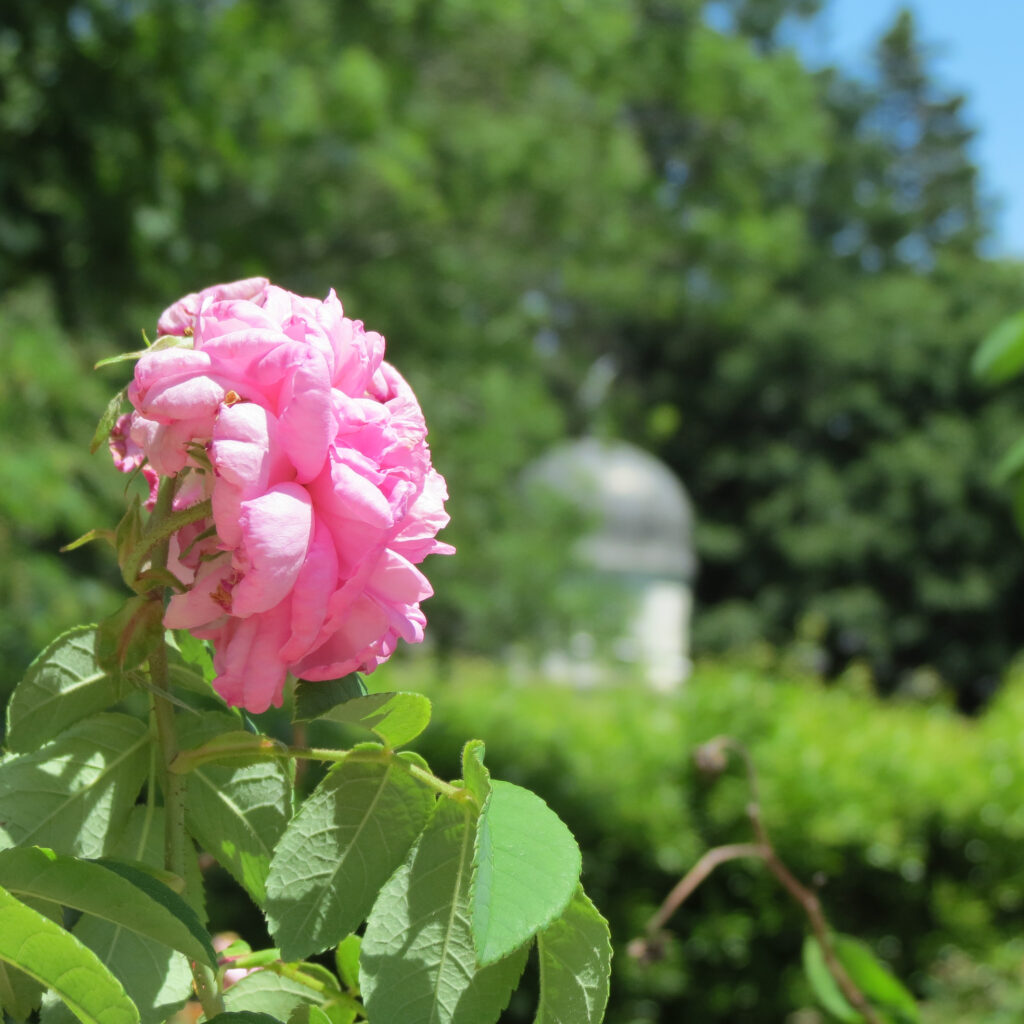
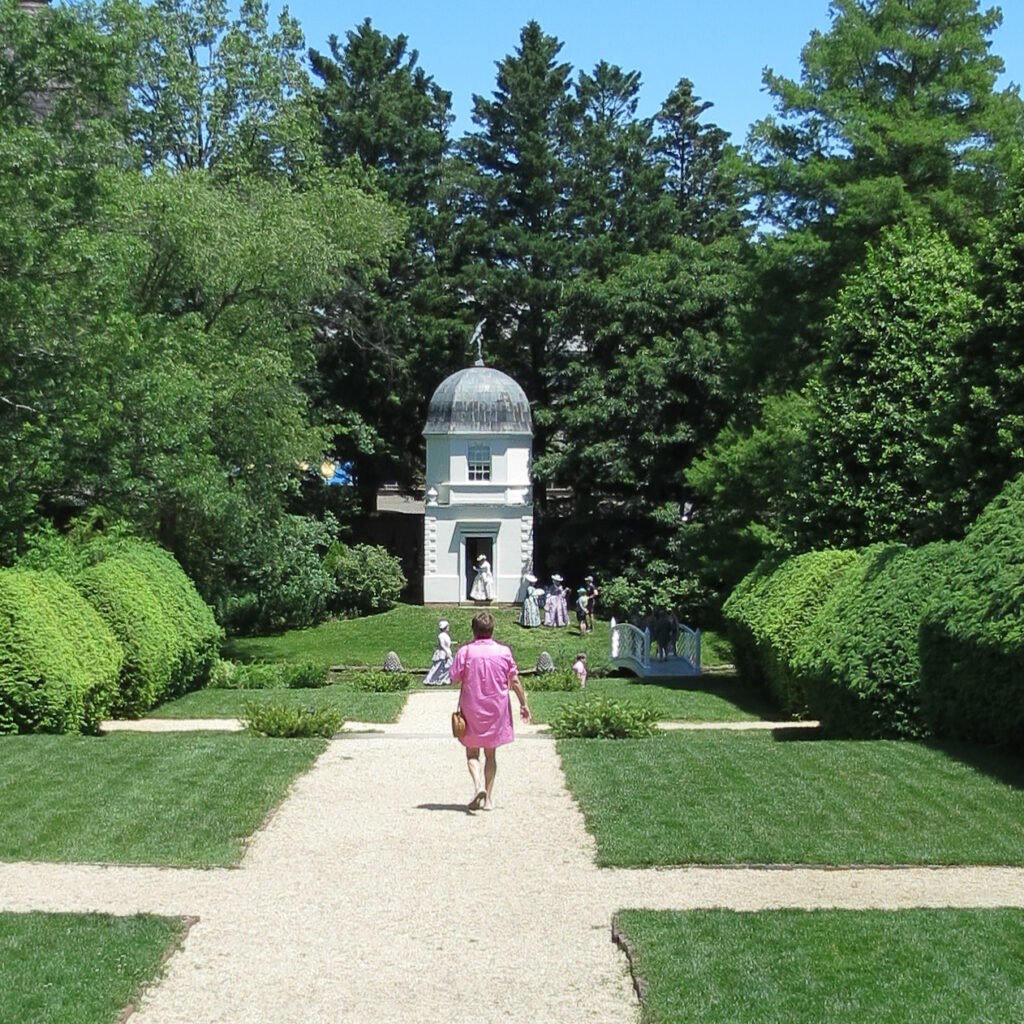
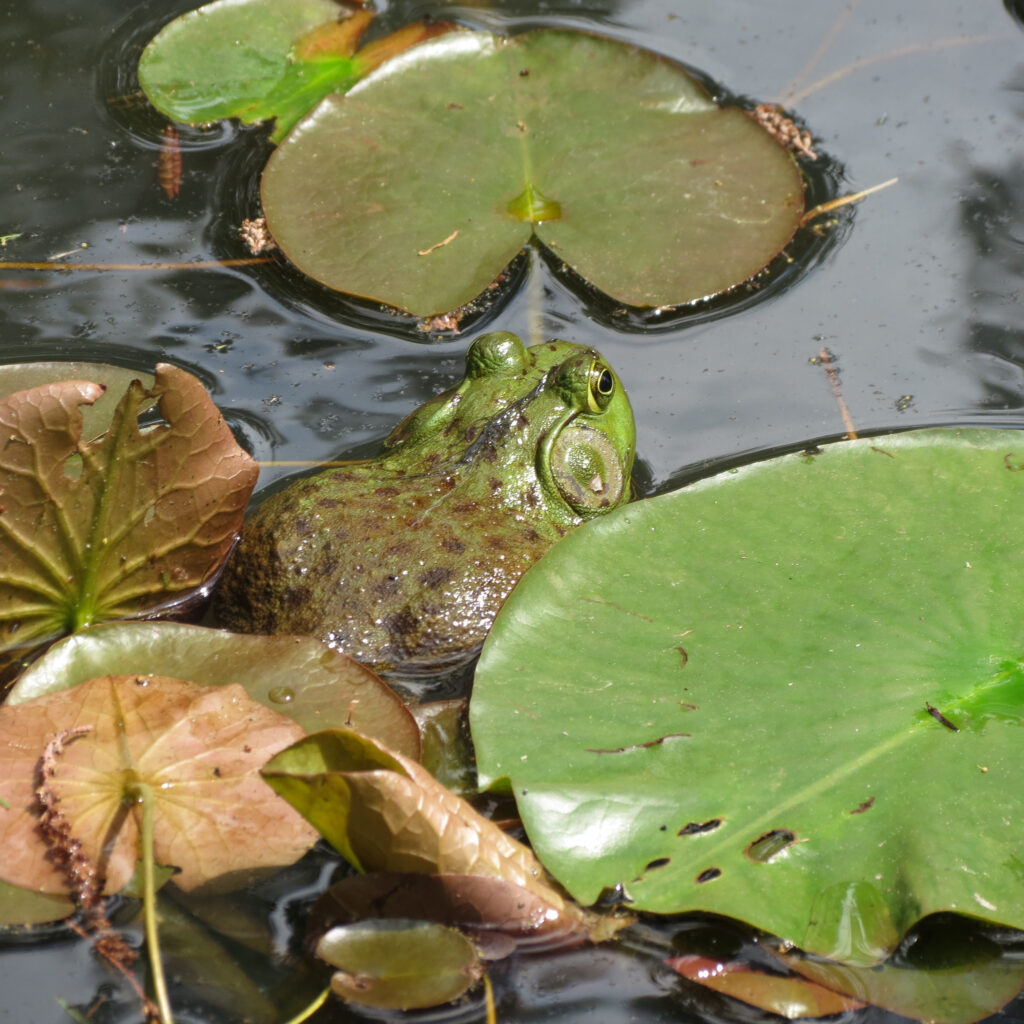
Paca’s garden itself is a performance of sorts, designed by Paca as both sanctuary and stage. Its serpentine paths invite wandering. Its formal terraces and parterres frame visitors as players in a carefully composed scene. The garden’s fish-shaped pond and Chinese-style latticework bridge evoke global trade, as well as a desire for novelty.

Paca’s Folly, the Summerhouse
The focal point in the garden is the Summerhouse. It is a two-story domed gazebo with a statue of Mercury atop the dome. Ornamental structures such as the Summerhouse earned the whimsical name ‘follies’ from the French word meaning ‘foolishness.’ Instead of having a practical function, follies showcased the owner’s wealth, imagination, and worldliness. They often took forms like faux ruins or foreign pavilions. Paca’s Folly appears to be a classical temple to Mercury, the Roman god of commerce, communication, and travelers.
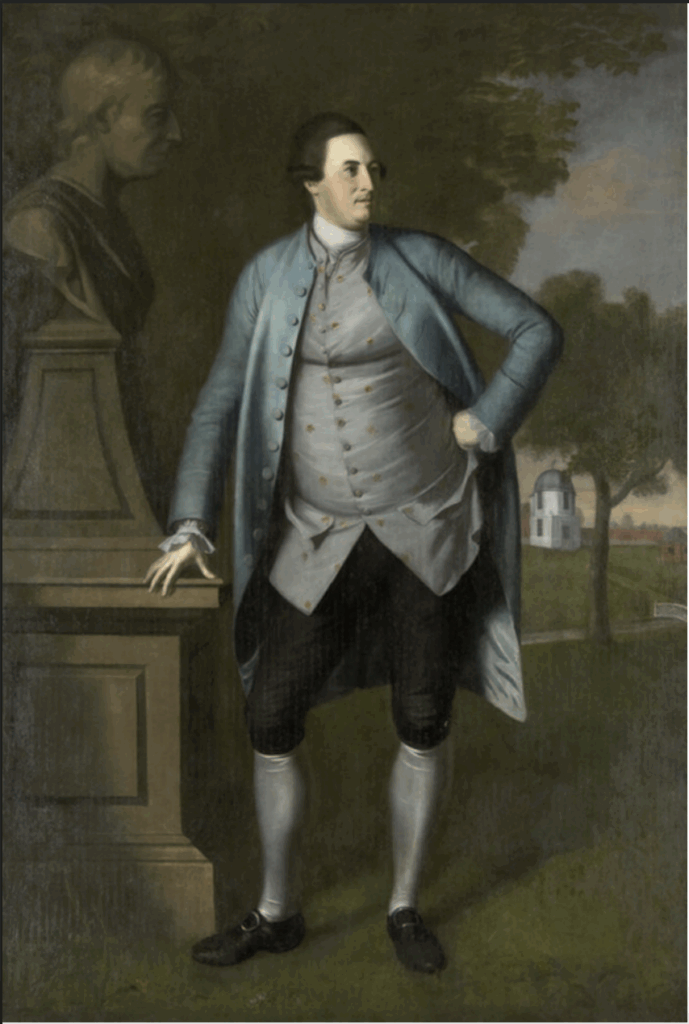
The domed Summerhouse appears in this 1772 portrait of William Paca, painted by Charles Willson Peale. From this clue, researchers were able to reconstruct the site from a series of archeological digs in the Paca Garden.
The House as a Social Statement
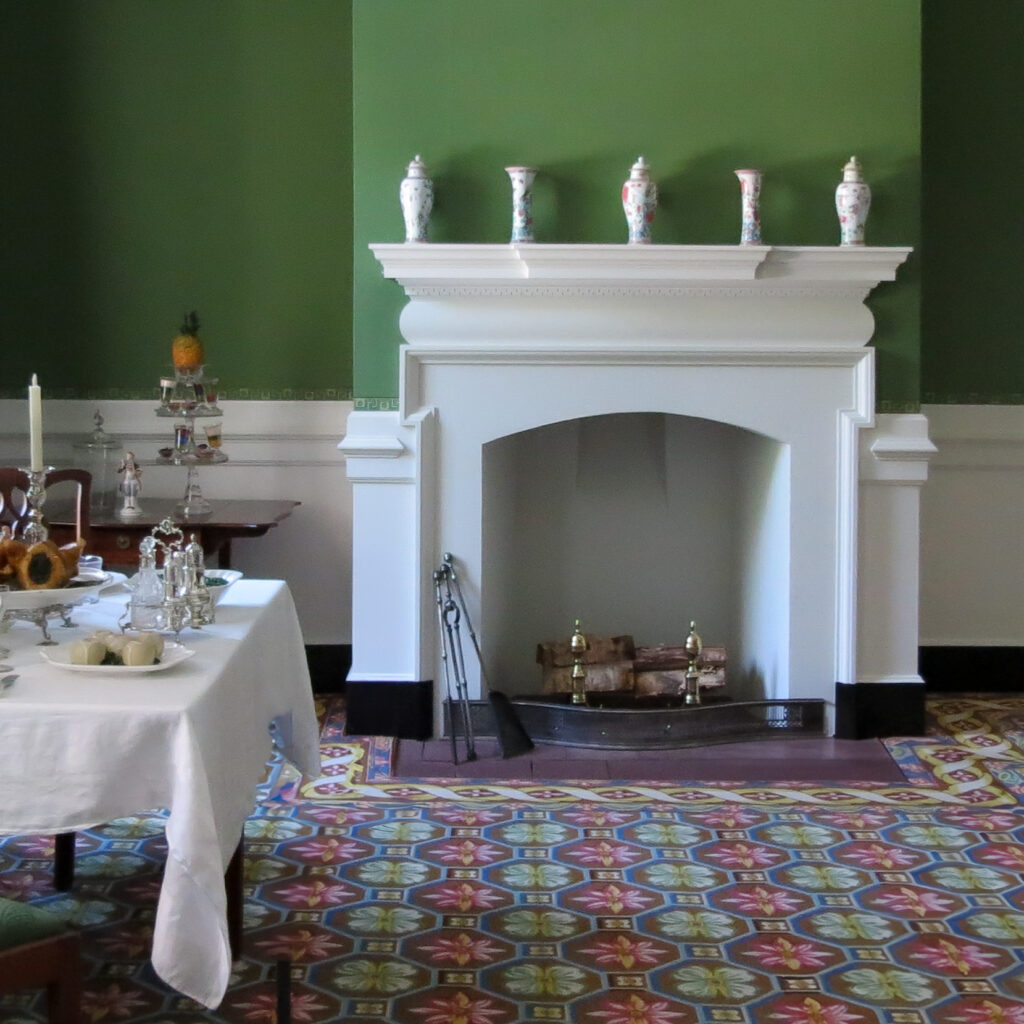
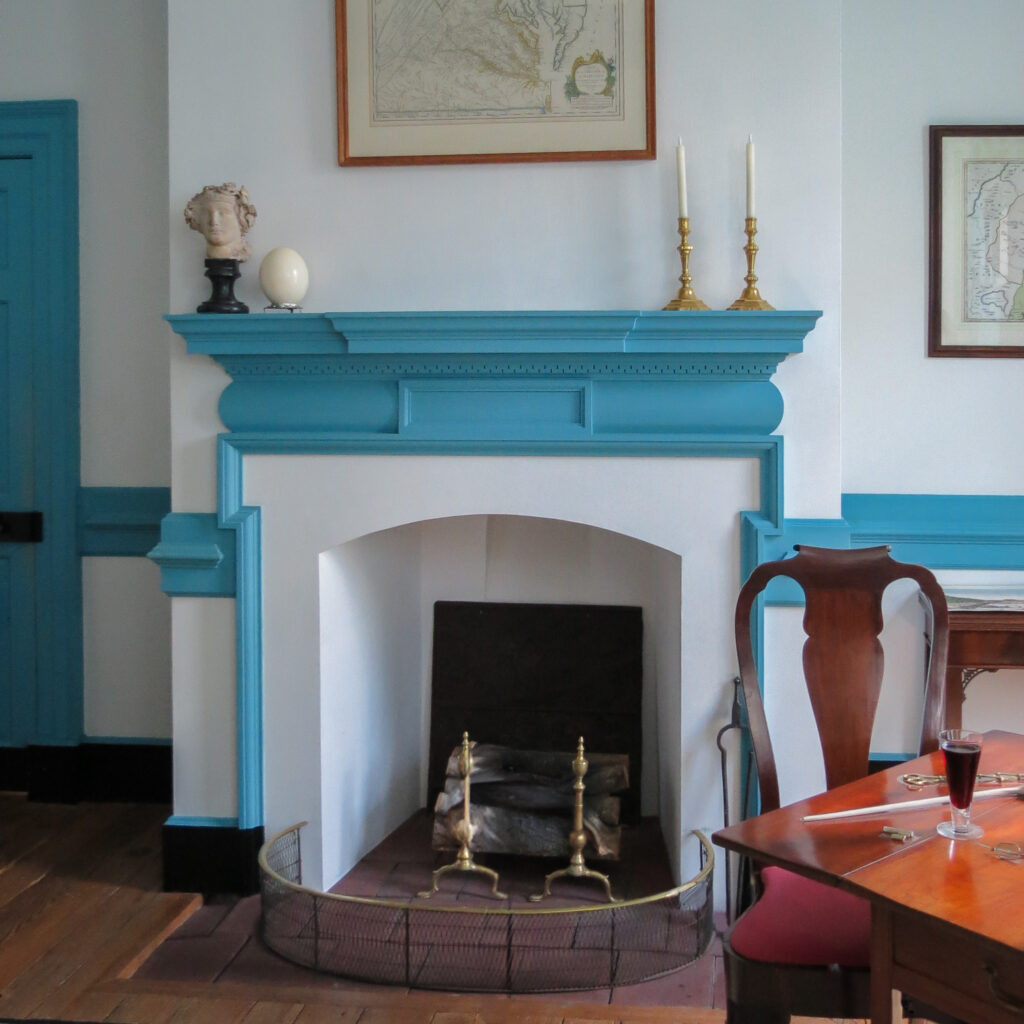
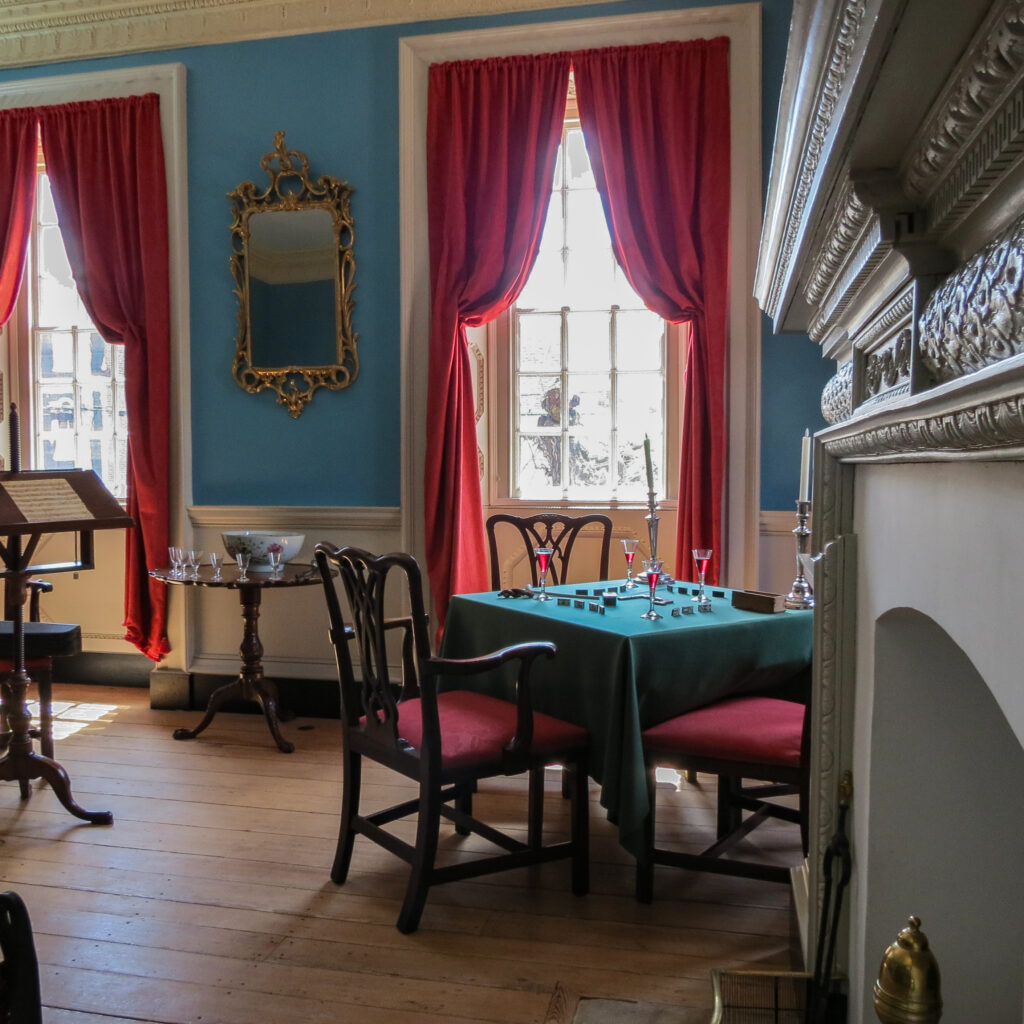
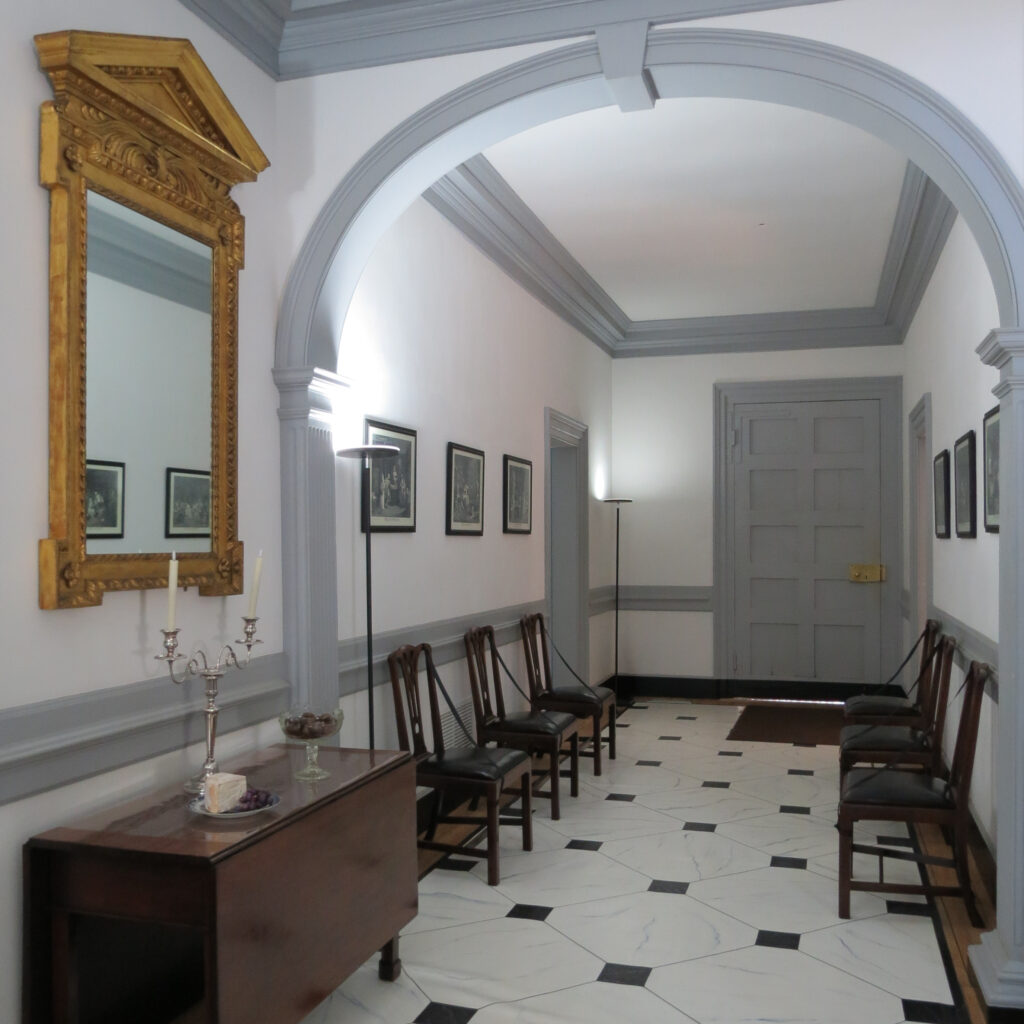
More than decoration, Paca crafted the garden as an extension of his social and political life. It was a place to host guests and display refinement. He also used it to stage the world he wanted others to see. He similarly appointed his 1760s Annapolis home with imported furnishings and décor. Paca selected each piece to convey his social position and taste to visitors.
Founding Figure of Maryland
William Paca (1740-1799) was an influential figure in Maryland’s political sphere. He signed the Declaration of Independence (1776) and served as Governor (1782-1785). Additionally, he wrote the provisions for freedom of religion, freedom of the press, and legal protection for citizens accused of crimes in the Bill of Rights (1787). President George Washington appointed Paca to the Federal District Judge for Maryland in 1789, which he held for the rest of his life.