I recently traveled to the Deep South for the first time. My impetus for this trip was the opportunity to visit the Whitney Plantation, the only museum in Louisiana dedicated to interpreting the daily lives and horrific experiences of slaves on sugarcane plantations. The Whitney Plantation was our first stop after beginning in New Orleans, and I chronicle that unforgettable visit in a blog post.
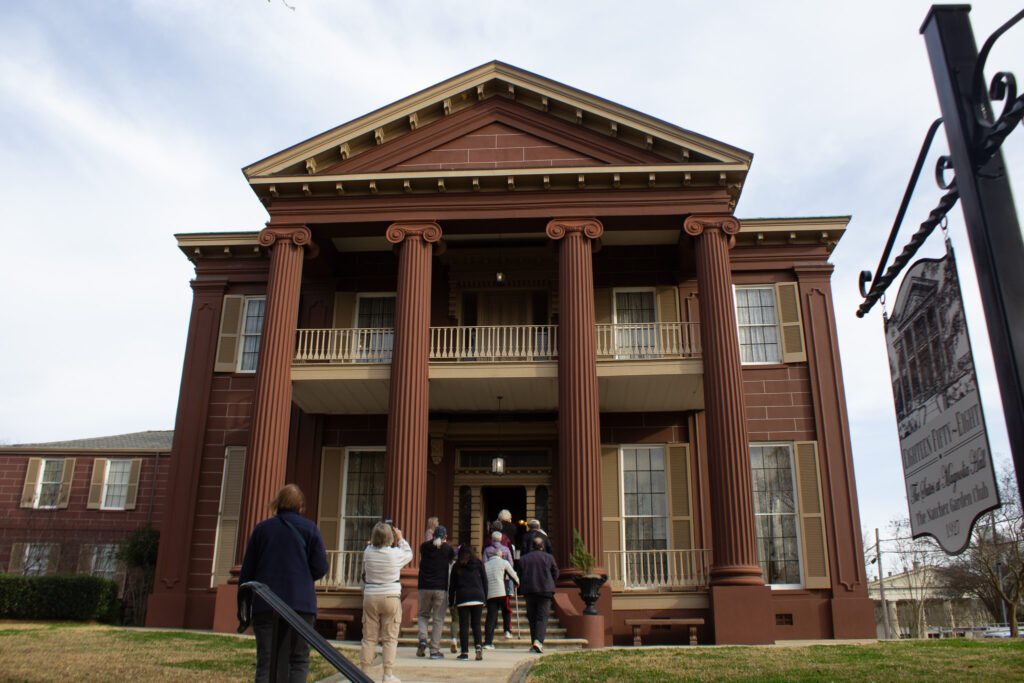
Our ship, the Mississippi Delta Explorer, then continued up the Mississippi River, stopping at Natchez, home to many historic buildings, where we visited Magnolia Hall. This led me to ponder a recurring question:
Why do we preserve old buildings?
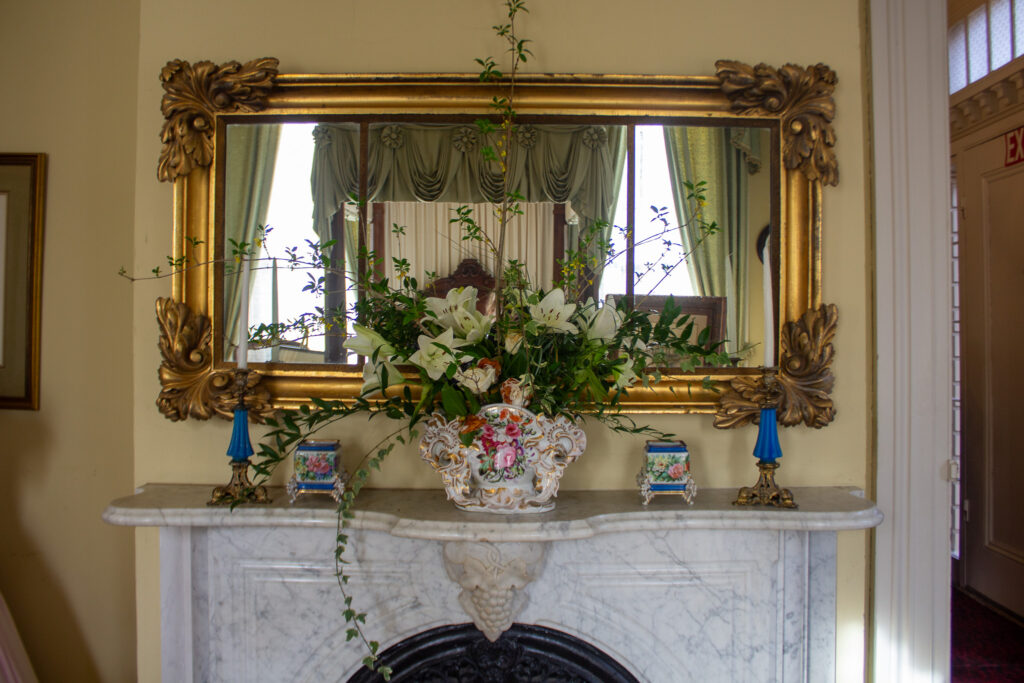
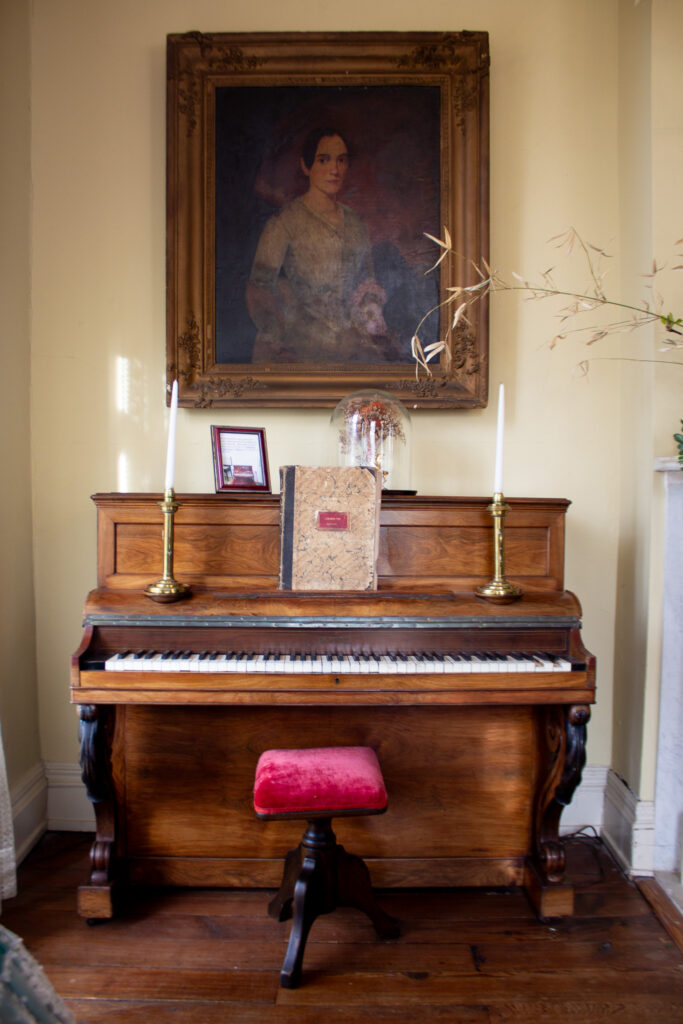
The answer seems obvious when we stand in places tied to nationally significant events or famous names. Battlefields, presidential homes, and sites of political upheaval carry an accepted sense of importance. But the question becomes more complicated when standing in a place like Magnolia Hall in Natchez, Mississippi—a beautiful nineteenth-century house with no singular claim to fame, no dramatic historical turning point attached to its walls. Magnolia Hall is a prime example of the nostalgic South, representing the spirit of a region’s history and memory without being home to a known historic figure or event. And yet it has been carefully restored, maintained, and repurposed as both a bed-and-breakfast and the headquarters of the Natchez Garden Club.
Preservation Beyond “Great History”
Perhaps that is because preservation is rarely only about “great history.” More often, it is about continuity. Old buildings anchor communities in time. They become landmarks not simply because of what happened there, but because of what they represent: memory, identity, aspiration, taste, or even nostalgia. Magnolia Hall may not have altered the course of American history, but it reflects a particular vision of Natchez and of the antebellum South that many people still find meaningful, beautiful, or worthy of stewardship.
Walking through Natchez, it becomes clear that preservation itself has become part of the city’s identity. The homes are not merely artifacts; they are part of an entire cultural and economic ecosystem. House tours, garden clubs, pilgrimage events, and hospitality industries all depend upon the survival of these structures. In that sense, Magnolia Hall’s current role tells us as much about the twentieth and twenty-first centuries as it does about the nineteenth.
The People Who Chose to Save It
The Natchez Garden Club becoming its caretaker is significant in its own right. Civic organizations—often led by women—played an enormous role in the preservation movement across the United States, especially in the South. Long before preservation became professionalized, local groups raised funds, organized tours, and restored aging buildings they feared might otherwise disappear. Their work shaped which histories were preserved and how those histories were presented to the public.
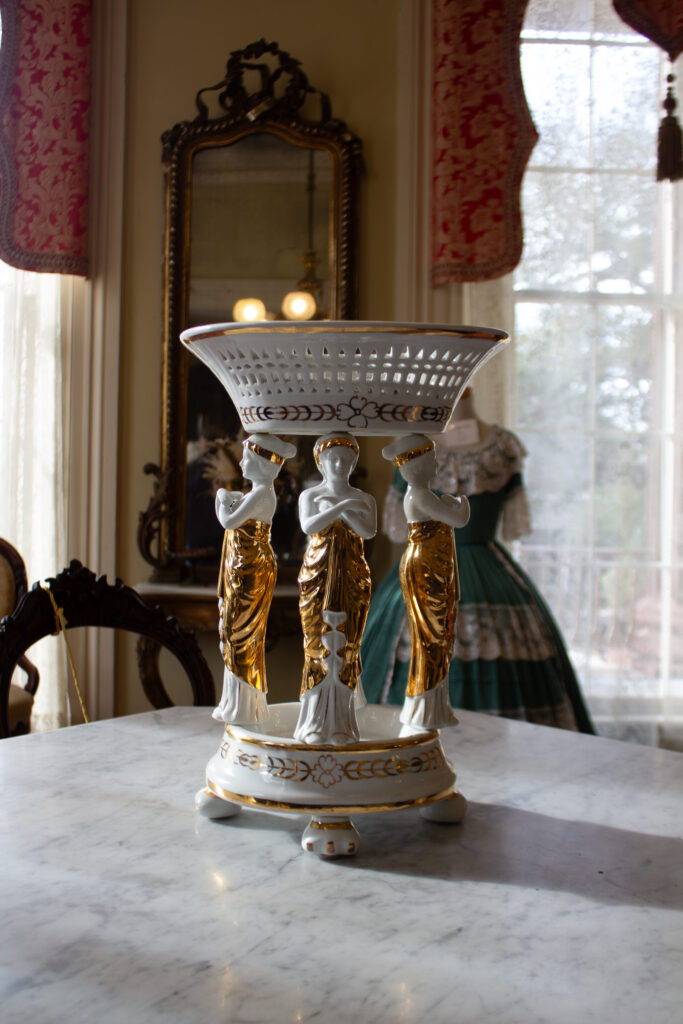
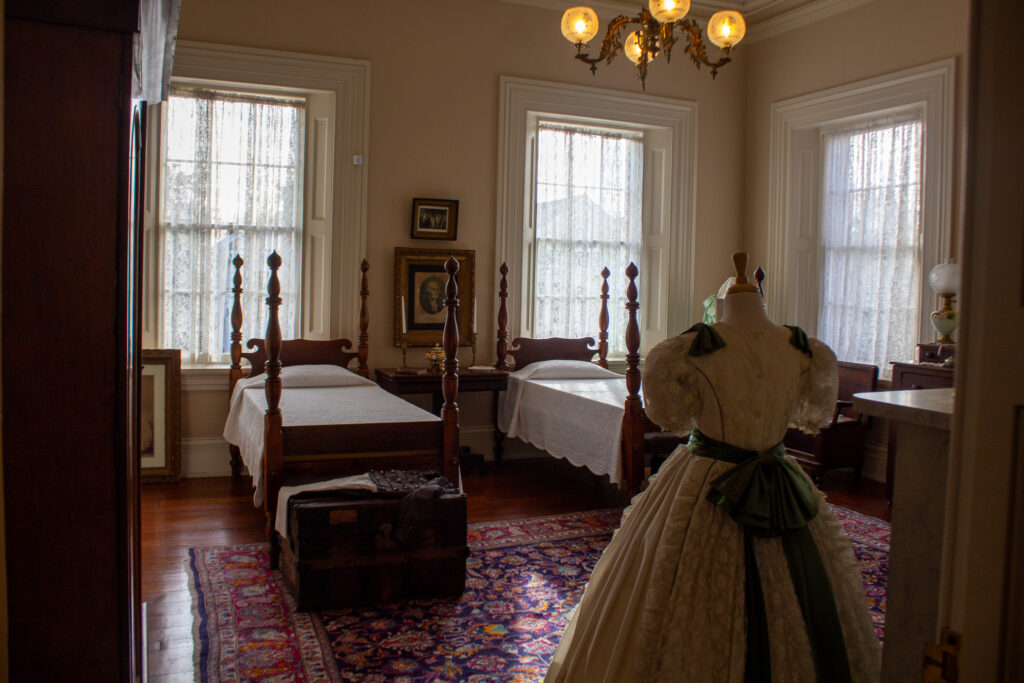
That shaping is visible throughout Magnolia Hall itself. The second story contains a display of dresses worn for Natchez’s antebellum celebrations: sweeping gowns intended to evoke the antebellum South, though often made from unmistakably modern bridal satins and synthetic fabrics. Coming from the world of Revolutionary War reenactment—with its intense attention to period-accurate textiles, construction techniques, and material culture—the contrast is striking. These costumes are not attempts at strict historical recreation so much as pageantry, romantic performance rather than interpretation.
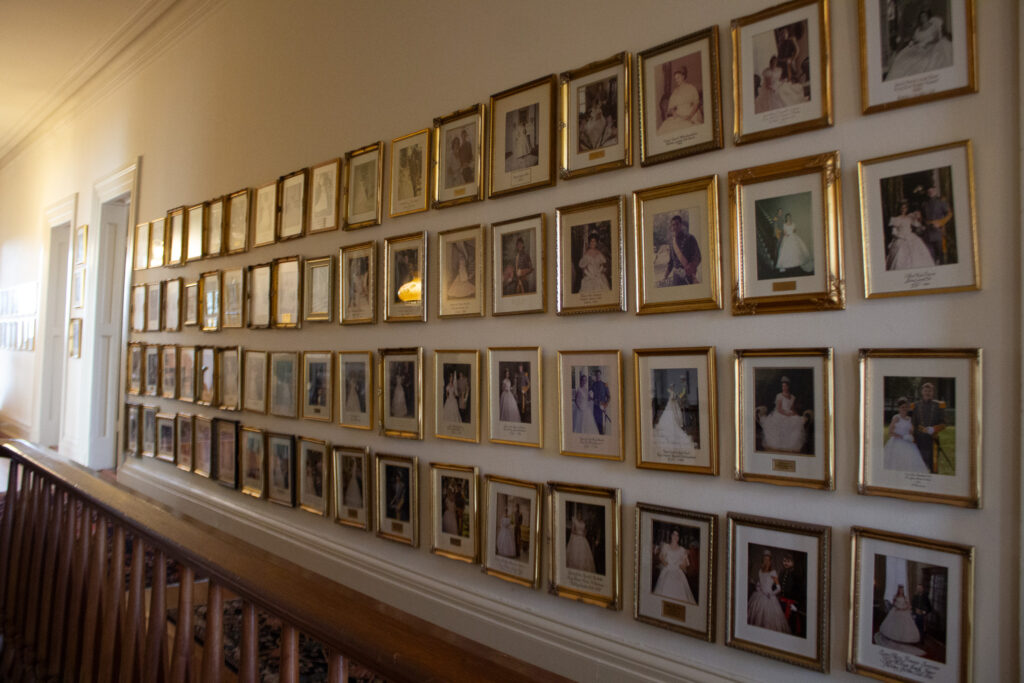
The walls nearby are lined with portraits of the annual “Queens” of the celebrations, posed in elaborate gowns, often accompanied by young men in grey Confederate-style uniforms. The cumulative effect can feel deeply unsettling: a carefully curated performance of Southern aristocratic identity, polished and ceremonial, with little acknowledgment of the violence and inequality underpinning the world being celebrated. Yet even within those portraits, change becomes visible over time. By 2020, the grey military uniforms disappear, replaced by modern tuxedos. The shift is subtle, but telling. Even traditions rooted in nostalgia are forced to respond to changing cultural sensibilities.
Beauty, Nostalgia, and Selective Storytelling
Preservation, then, is never neutral. Choosing to preserve one building while allowing another to vanish reveals contemporary values as much as historical ones. Magnolia Hall survives not necessarily because it is the most historically important structure in Natchez, but because generations of people found it aesthetically pleasing, symbolically resonant, or economically useful.
Beauty itself can motivate preservation. So can civic pride. So can tourism. These motivations are not inherently shallow, though they can sometimes result in selective storytelling.
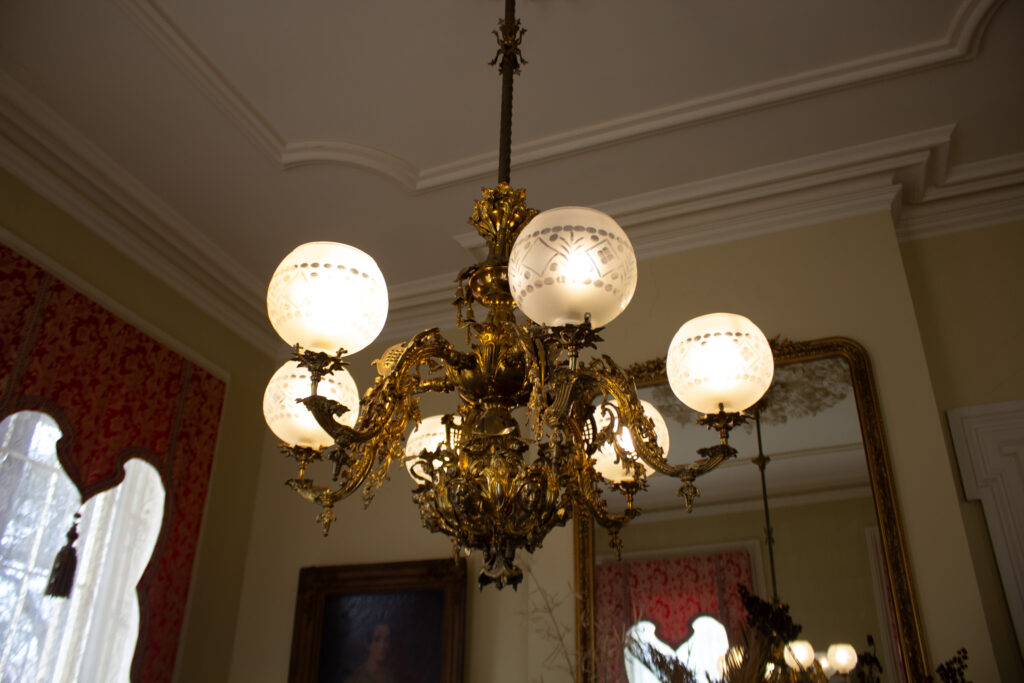
That selectivity raises difficult questions, particularly in a city like Natchez, where immense architectural beauty exists alongside histories of enslavement, exploitation, and inequality. Preserved homes can risk becoming stage sets for an imagined past if interpretation focuses only on chandeliers, gardens, and family silver. At their best, however, historic buildings can hold contradictions in view. They can invite visitors to admire craftsmanship while also confronting the systems that made such grandeur possible.

What Preservation Says About the Present
Old buildings survive because people continually decide they should. Sometimes that decision is rooted in historical significance; sometimes in beauty, memory, or local identity. Places like Magnolia Hall remind us that preservation is not only about the past. It is also about the stories communities choose to carry forward into the present.