Keeping a Heritage Skill Alive
October 3-5, 2025, the Bidwell House Museum (Monterey, Massachusetts) hosted its second “Army on Campaign” reenactment, portraying the lives of soldiers and followers during the American Revolution.
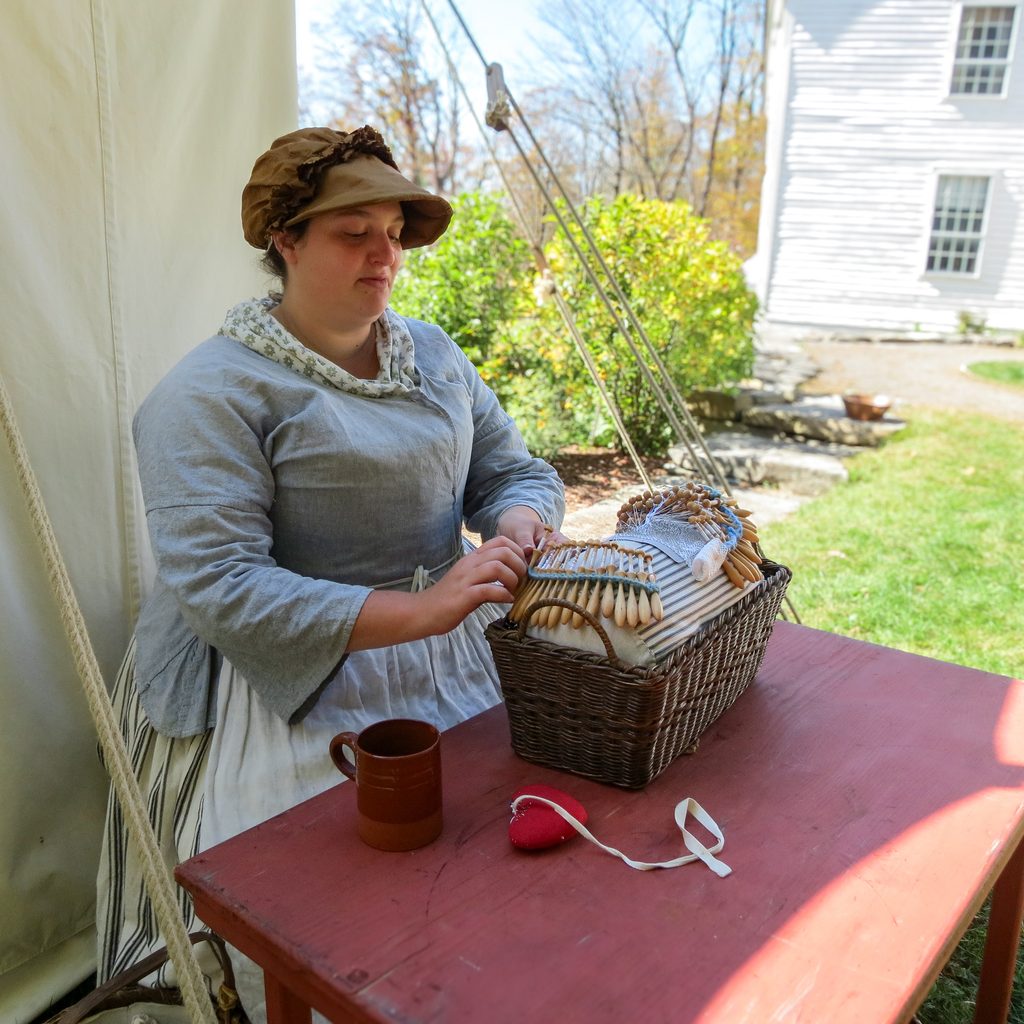
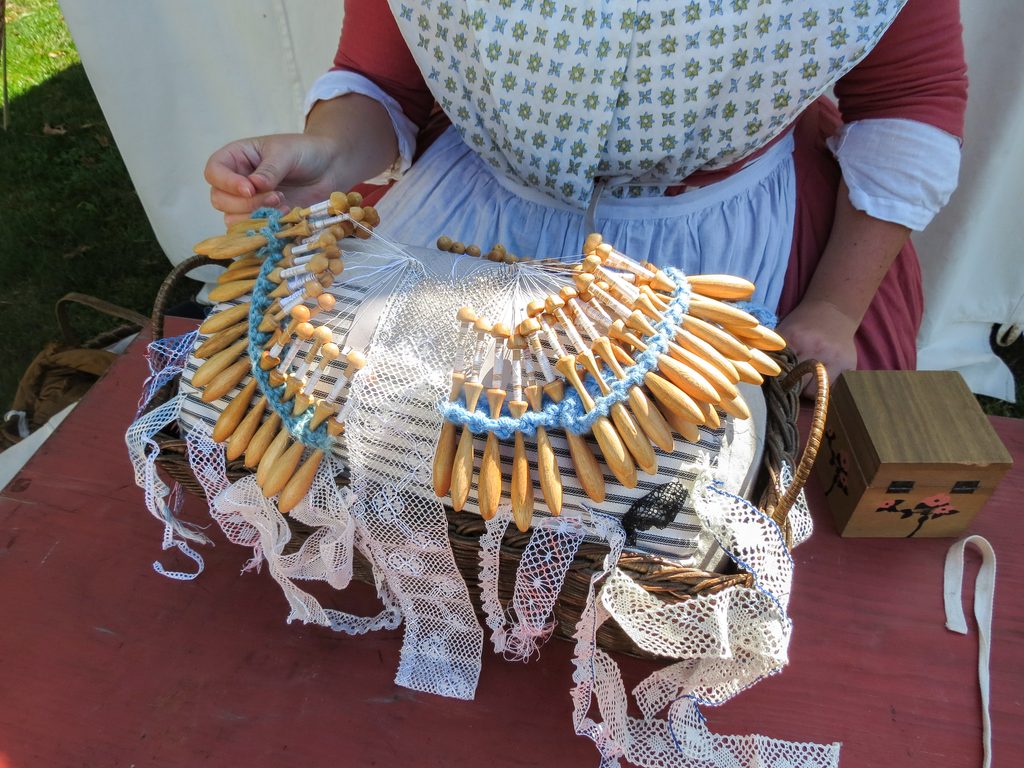
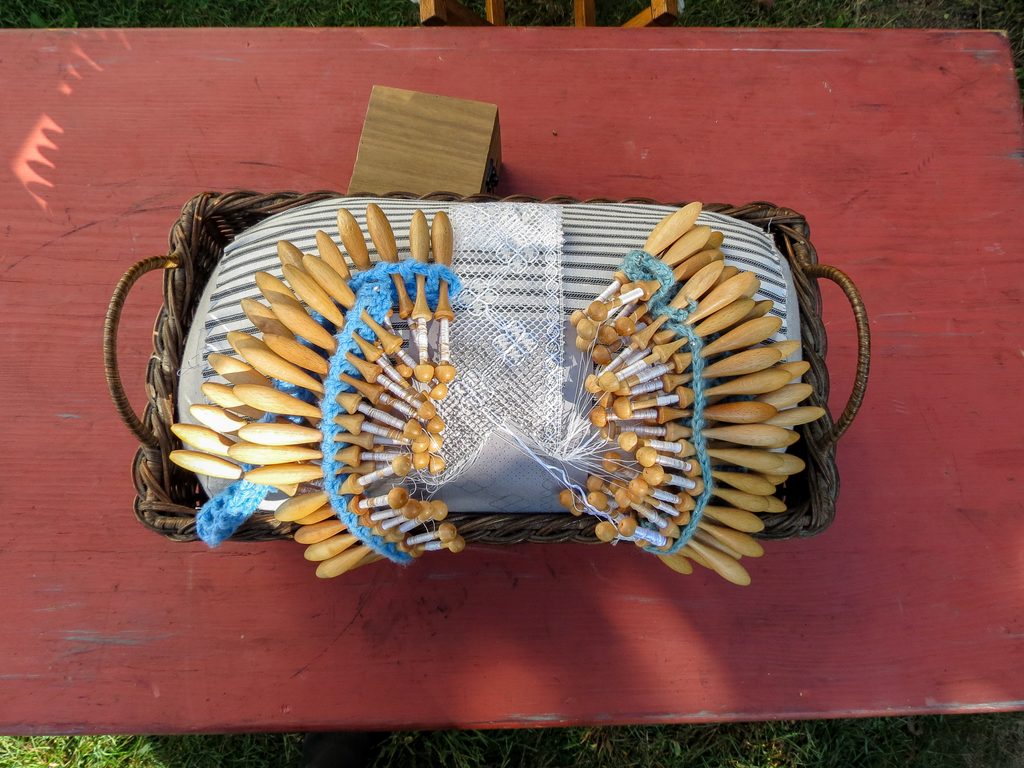
One of the artisans demonstrating heritage skills was Jane Marie (A Jane of All Trades). Her fine bobbin-work lace is an example of a once-lucrative skill that modern machinery has all but erased. Lace makers used wooden dowels (bobbins) to work individual threads, securing them in place with pins on a cushion.
Bobbin Lace in the Revolutionary Era
Women’s lacework in Ipswich, Massachusetts, developed its own economy and fame. During the Revolutionary era, lacemaking gave women a way to support their households while many men were away or killed in wartime. Beyond being a beautiful handcraft, lace-making offered a means of economic survival.
By the late eighteenth century, Ipswich women and girls produced more than 40,000 yards of lace each year. Lace was a valuable handmade commodity, and fashionable enough to attract customers well beyond Massachusetts. In 1789, George Washington visited Ipswich and purchased black silk lace for his wife, Martha.
(Jane also shared her thoughts on Facebook when an app offered to “improve” one of my photos. Read her thoughts on applying AI to photography of heritage skills here.)