Frontier Living
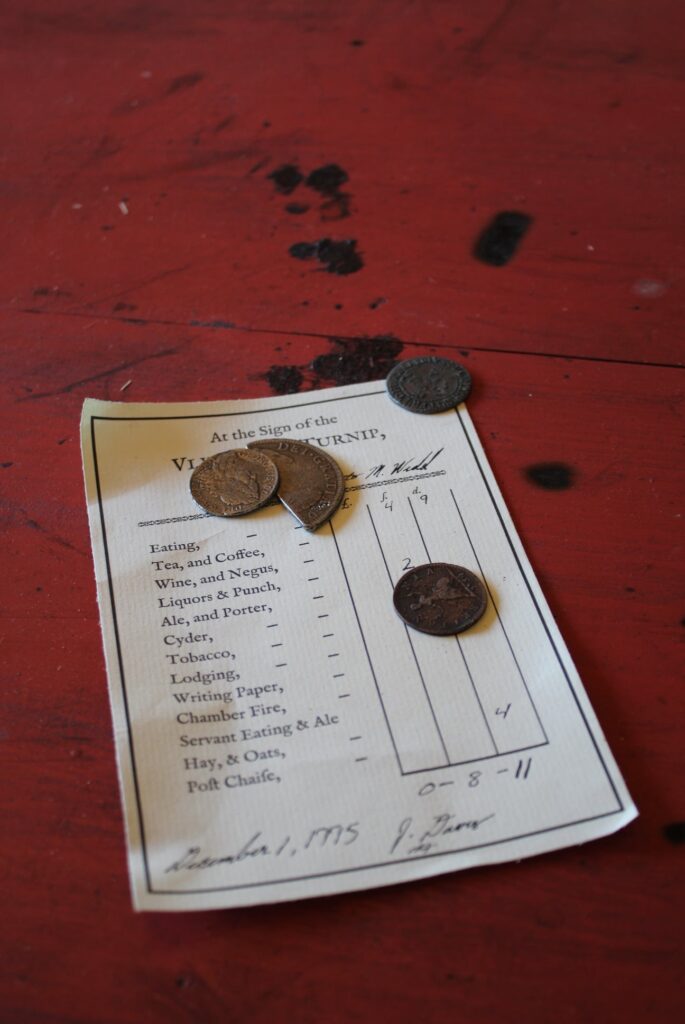
Taverns were a vital hub of information in the eighteenth century. Taverns frequently subscribed to newspapers (the most up-to-date news technology of the time) and served as proto post offices. In addition to food and drink, taverns commonly provided a place to do business and hear political news. Many taverns offered lodging for travelers, and some hired out horses for “post chaise” travel.
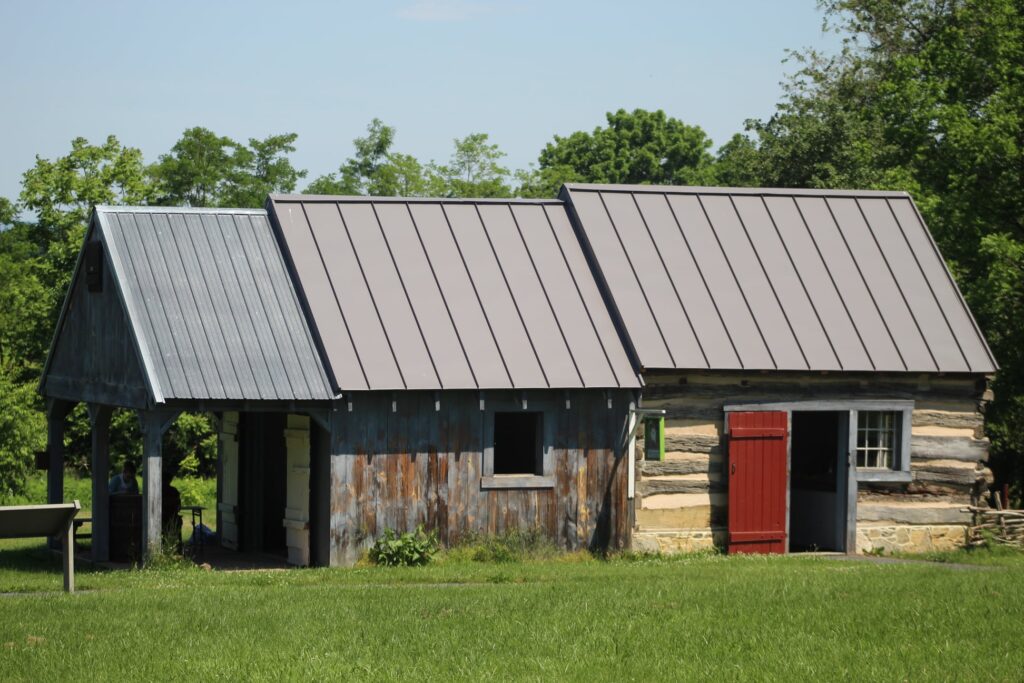
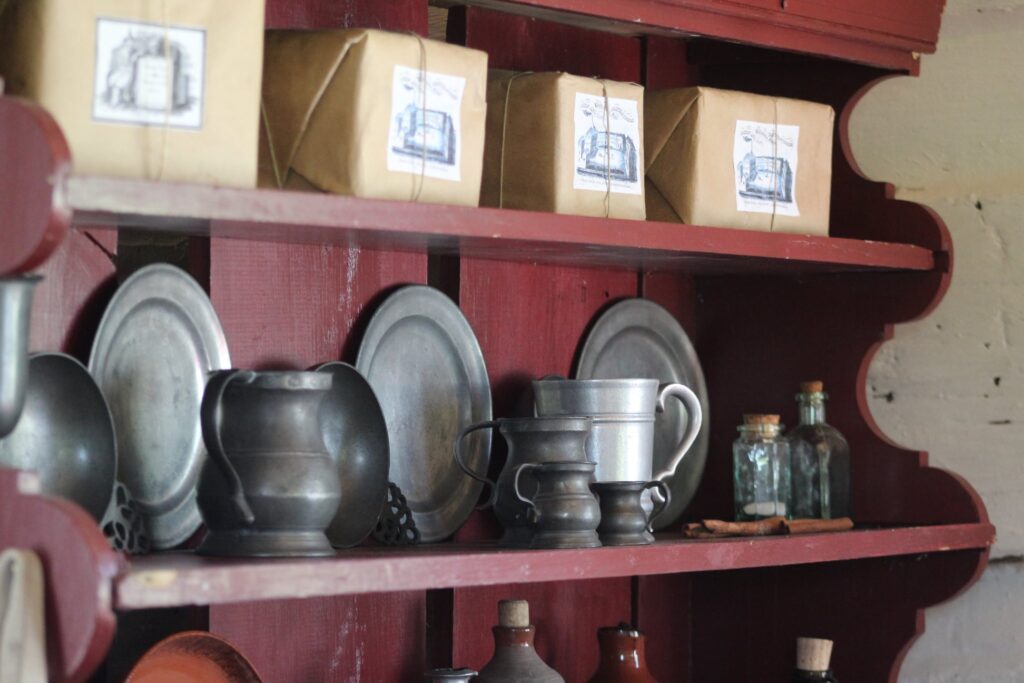
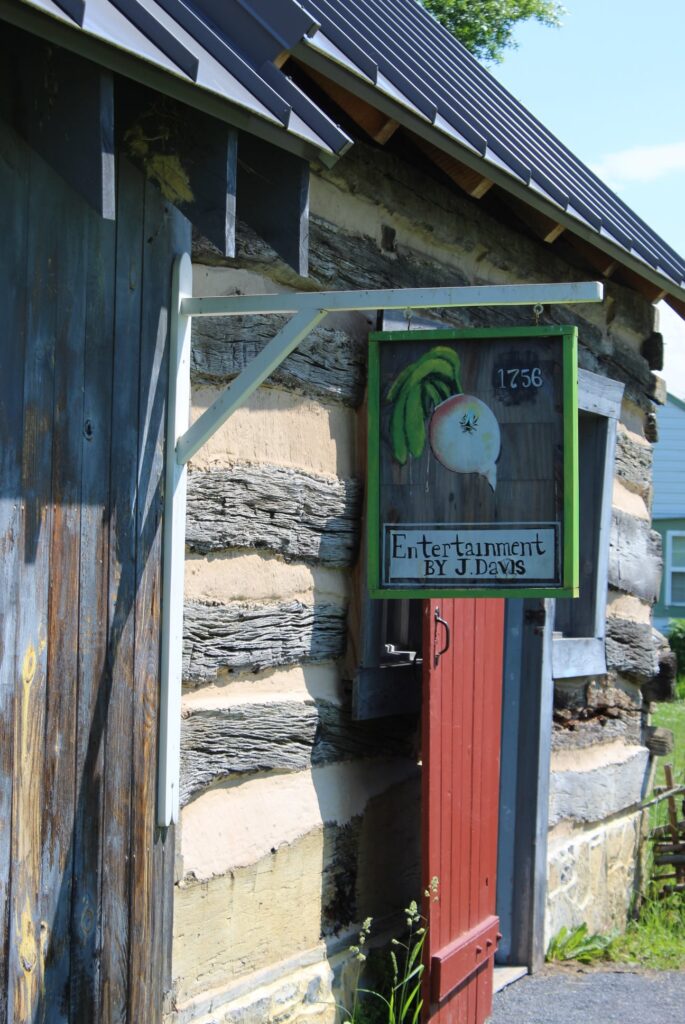
At the Sign of the Fly on the Turnip, 1756
In 2020, the Conococheague Institute created The Sign of the Fly on the Turnip tavern as a setting for living-history–style programming. At the same time, this space was designed to support immersive interpretation rooted in everyday experience. More broadly, the organization’s efforts to convey the region’s cultural and natural history rely on active, participatory methods. In particular, living-history demonstrations invite visitors to observe, listen, and engage directly with the past.
Through these programs, hands-on activities highlight the rhythms of 18th-century rural life. The tavern setting also anchors these stories in familiar social spaces. Historically, such places served as centers of exchange, labor, and conversation. As a result, visitors gain insight into daily life along the Appalachian frontier. Taken together, this programming reflects the shared history of Pennsylvania, Maryland, and Virginia during the colonial era.
The “Water of Many Turns”
Conococheague Creek (phonetically pronounced “KAH-no-kah-cheek,” although pronunciations vary) is an 80-mile tributary of the Potomac River, flowing from Pennsylvania into Maryland.
The creek’s name comes from the Lenape language, meaning “water of many turns.” Before the 1700s, the Susquehannocks, Shawnees, Lenni Lenape (Delawares), and tribes of the Six Nations (Iroquois) used the region as a hunting and transportation corridor.
In the 18th century, the creek lent its name to the area’s settlement: the Conococheague Settlement. Today, the Conococheague Institute (Mercersburg, PA) is a hands-on regional learning center that includes living-history-style programs, including Colonial Living at the Conococheague Institute.
Candid Photography at Day Programming
One of my favorite parts of photographing reenactments and historic house programs is spending time with the dedicated, passionate volunteers who portray people of the past. I’ve had the pleasure of photographing similar programs, like one featuring May Fair at Pottsgrove Manor, and another highlighting the 1774 Burning of the Peggy Stewart in Revolutionary Annapolis.
Do you know of an annual event or historic house that could use excellent site or event photography? I would love to hear from you! Contact me about event or site photography at [email protected].