God Rest Ye, Merry Gentlemen
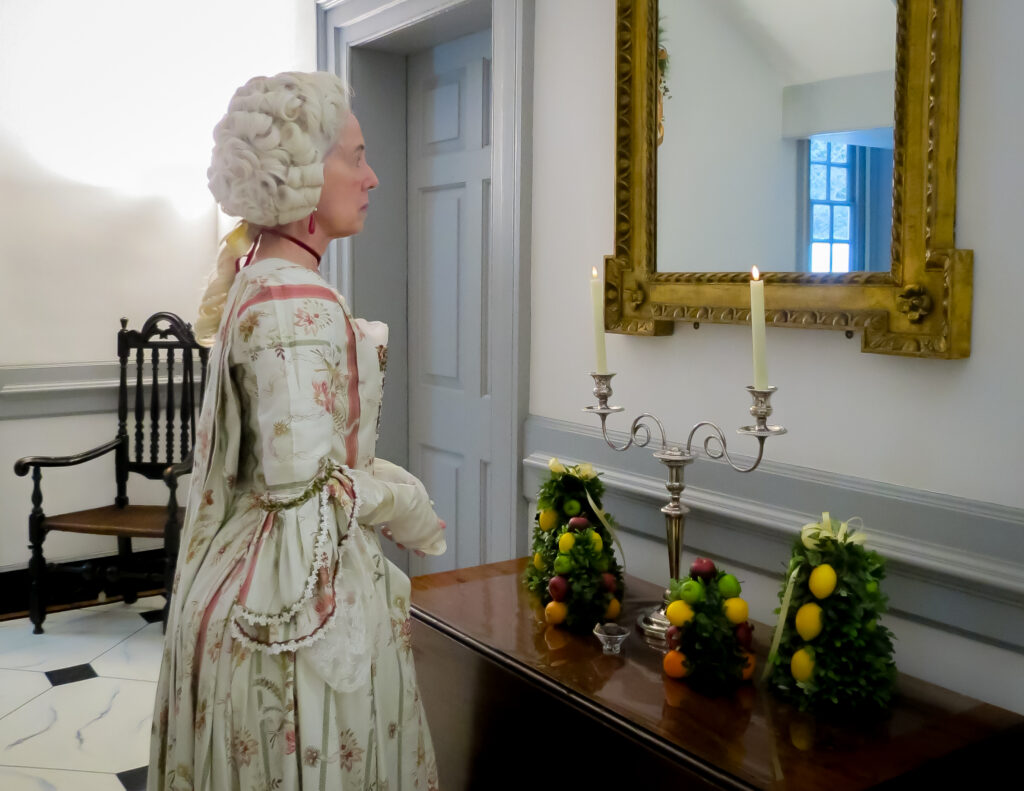
During the holiday season, the Paca House in Historic Annapolis offers a fascinating glimpse into a colonial Christmas. The dining room is transformed into a display of 18th-century abundance and refinement. Laden for the season, the table presents an array of foods that signal both celebration and status in an elite colonial household. These carefully arranged dishes invite visitors to consider not only what was eaten, but what such displays communicated about wealth, taste, and social position in colonial Annapolis.
A Holiday Table of Abundance
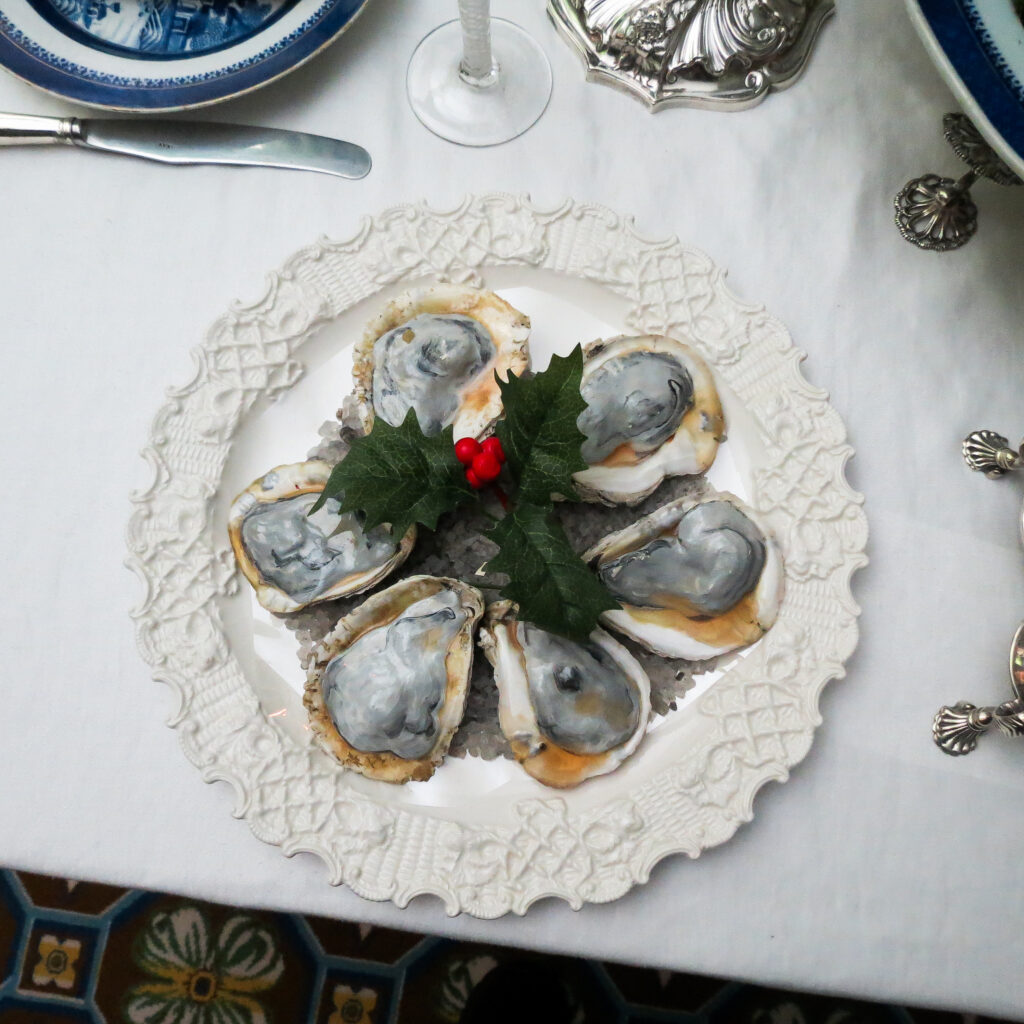
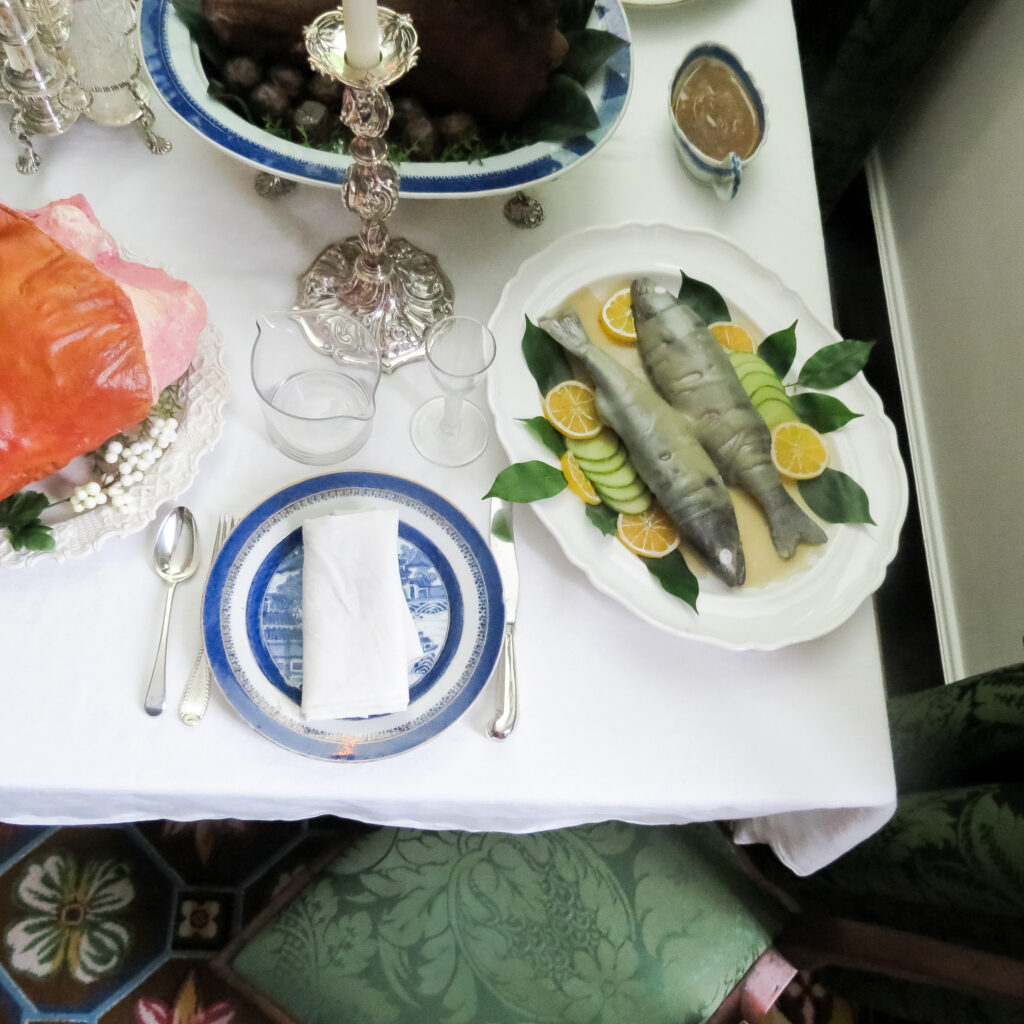
Most notably, oysters and fish dressed with lemon sauce appear among the offerings. Importantly, these dishes reflect Annapolis’s identity as a thriving 18th-century port city, where access to fresh seafood and imported citrus shaped local cuisine. Such offerings were an essential part of Christmas celebrations in colonial times, showcasing the city’s abundance. At the same time, such dishes underscore the close relationship between the Chesapeake Bay and daily life in the city.
Symbolism and Display
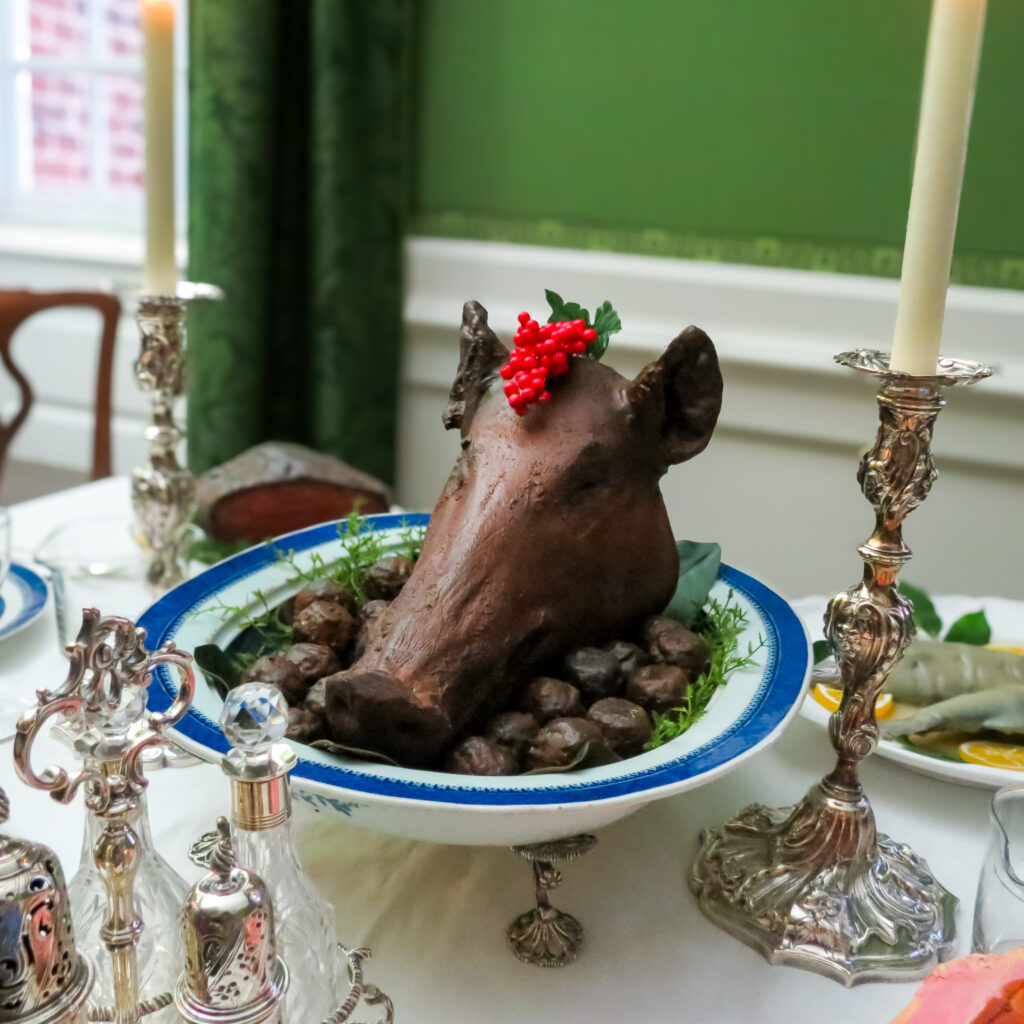
Equally striking, a roasted pig’s head serves as a dramatic centerpiece. Historically, the presentation of a boar’s head was associated with wealth, hospitality, and festive tradition, particularly during the winter season. This adds to the spirit of colonial Christmas festivities, enhancing the sense of celebration.
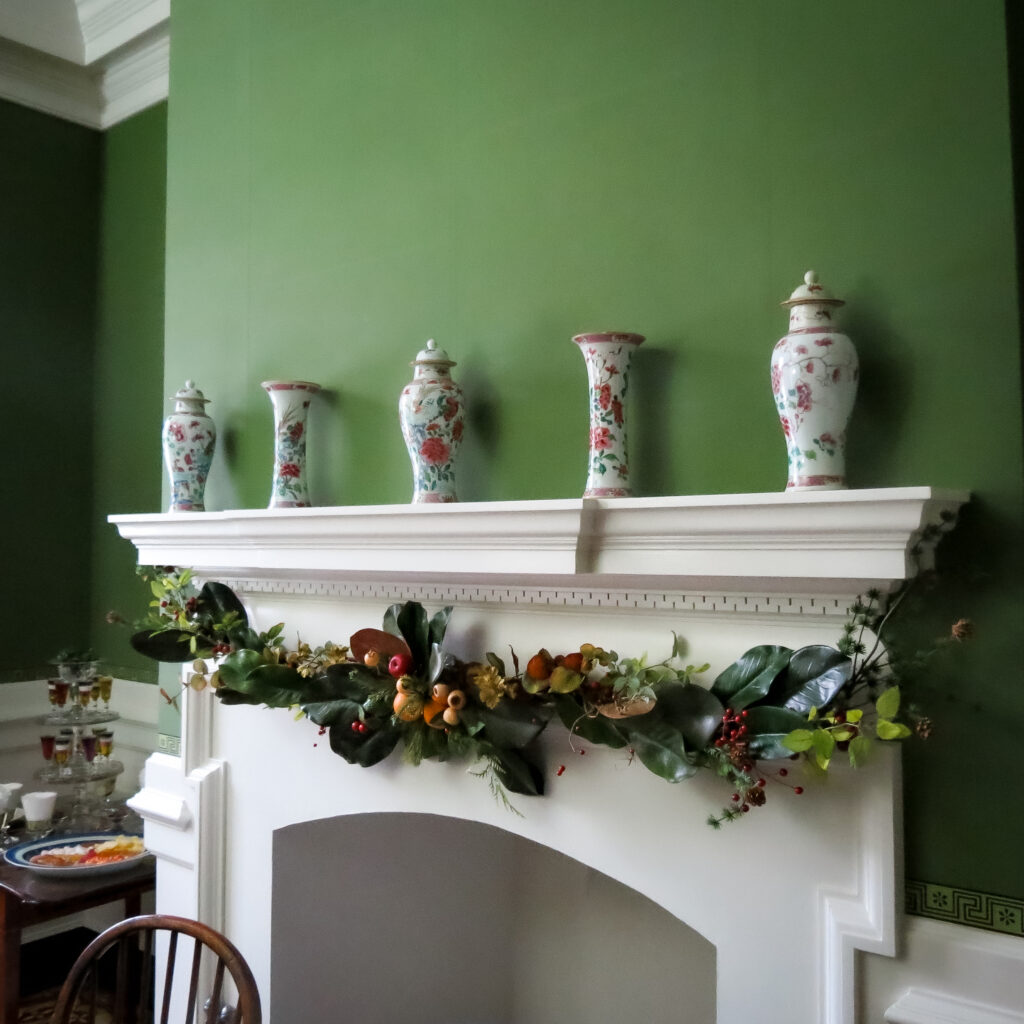
Meanwhile, the dining room itself reinforces the sense of occasion. Papered in a familiar colonial green, the space is anchored by figured carpets and framed by windows that look out onto the ornamental pleasure gardens and folly. As a result, the setting links interior refinement with the cultivated landscape beyond. In this way, the meal becomes part of a broader expression of taste, order, and gentility.
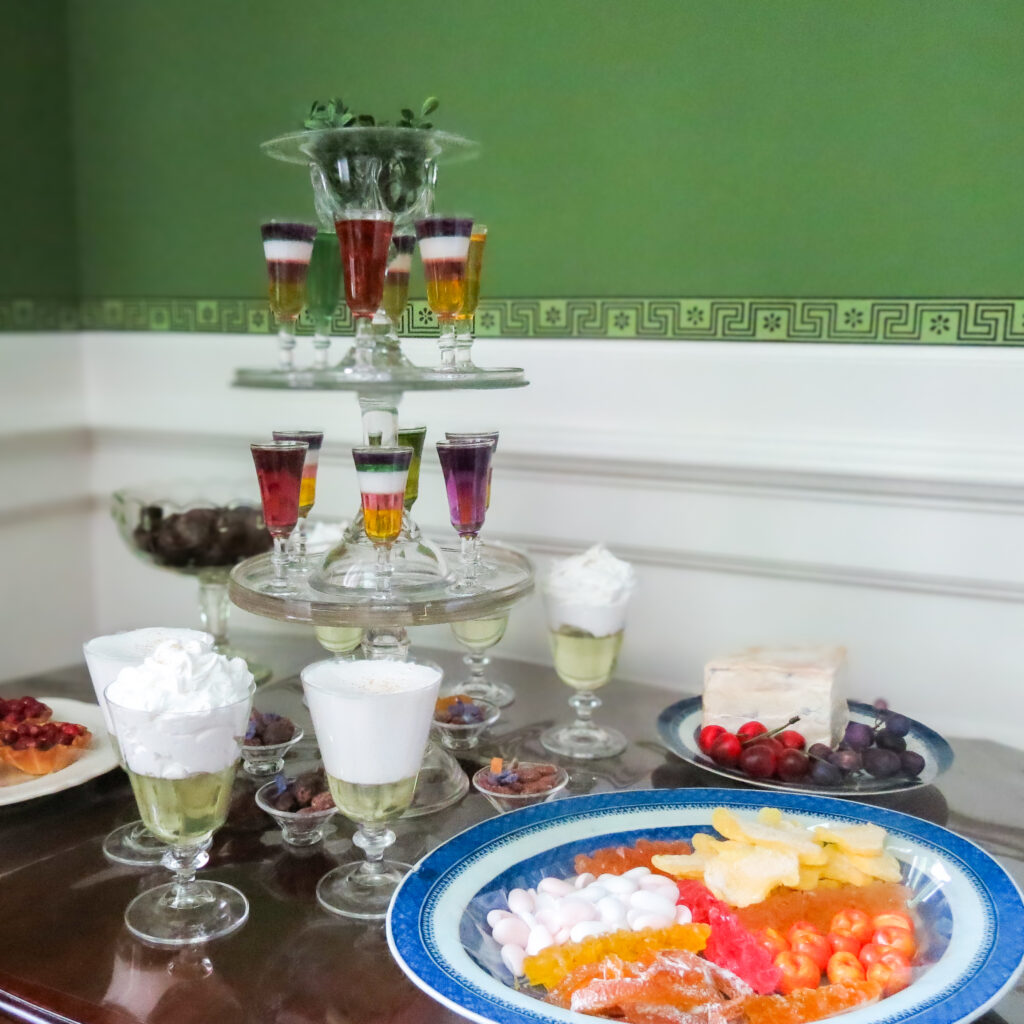
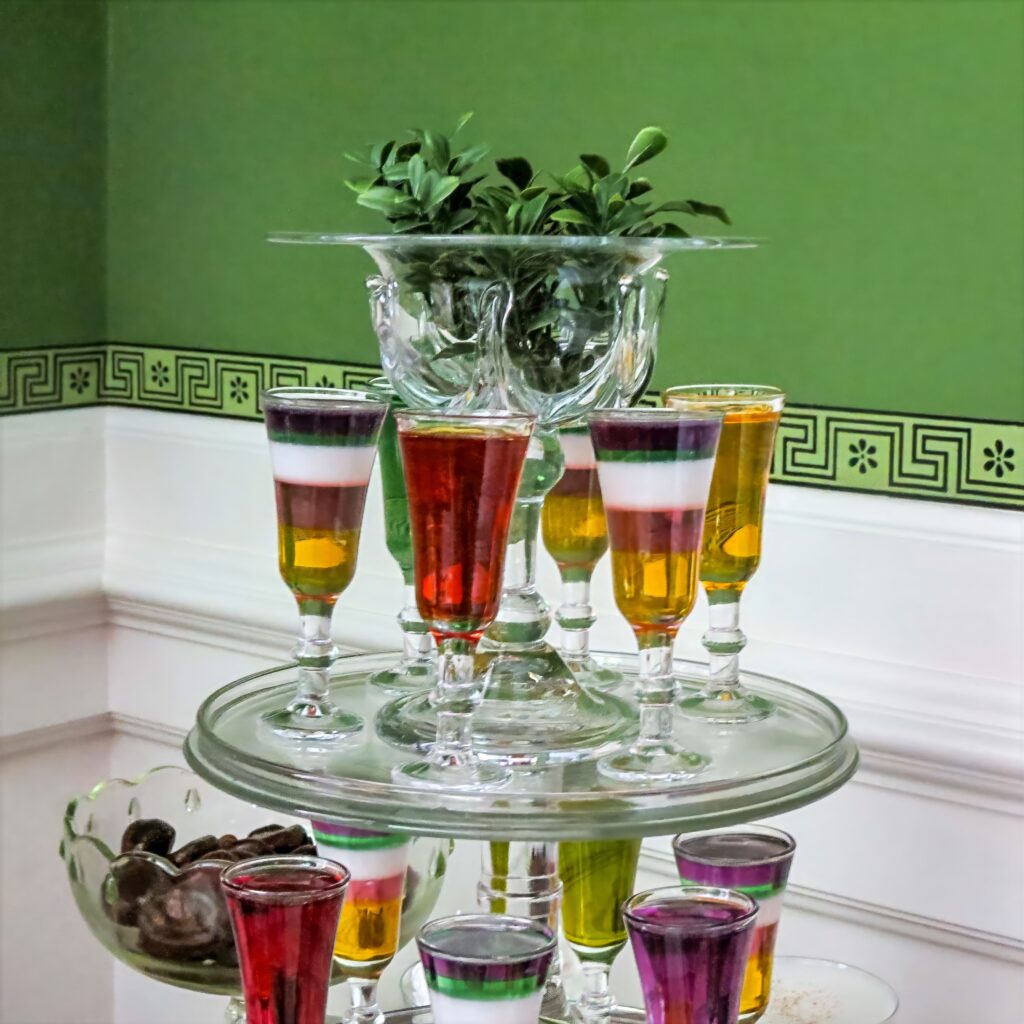
Jellies, Sweets, and Decorative Dainties
In addition, the surrounding “dainties,” including ribbon jellies molded from colored and flavored gelatin, add a note of visual pleasure. During a colonial Christmas, these decorative sweets were popular, enhancing the festive atmosphere. Through their bright hues and delicate forms, these jellies demonstrate both culinary skill and the period’s fondness for ornamental food.
In the Kitchen Below
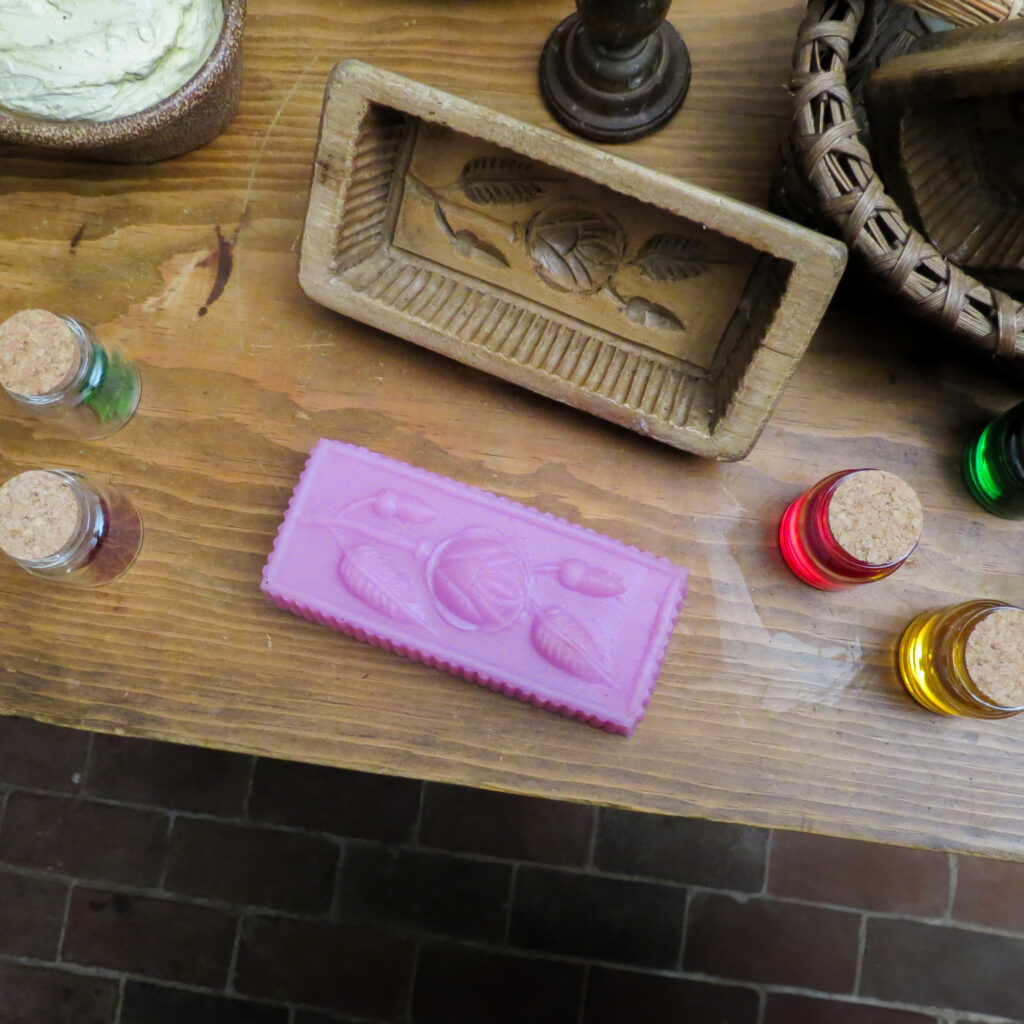
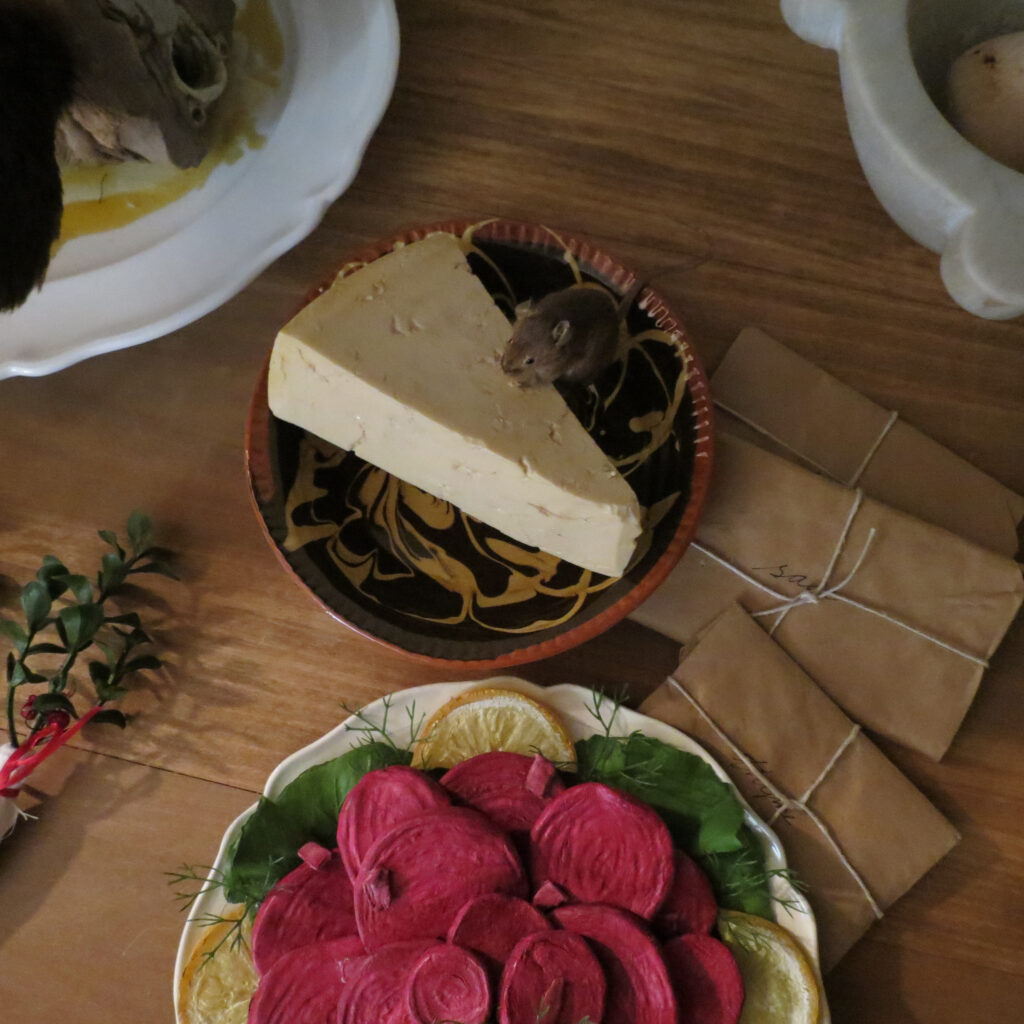
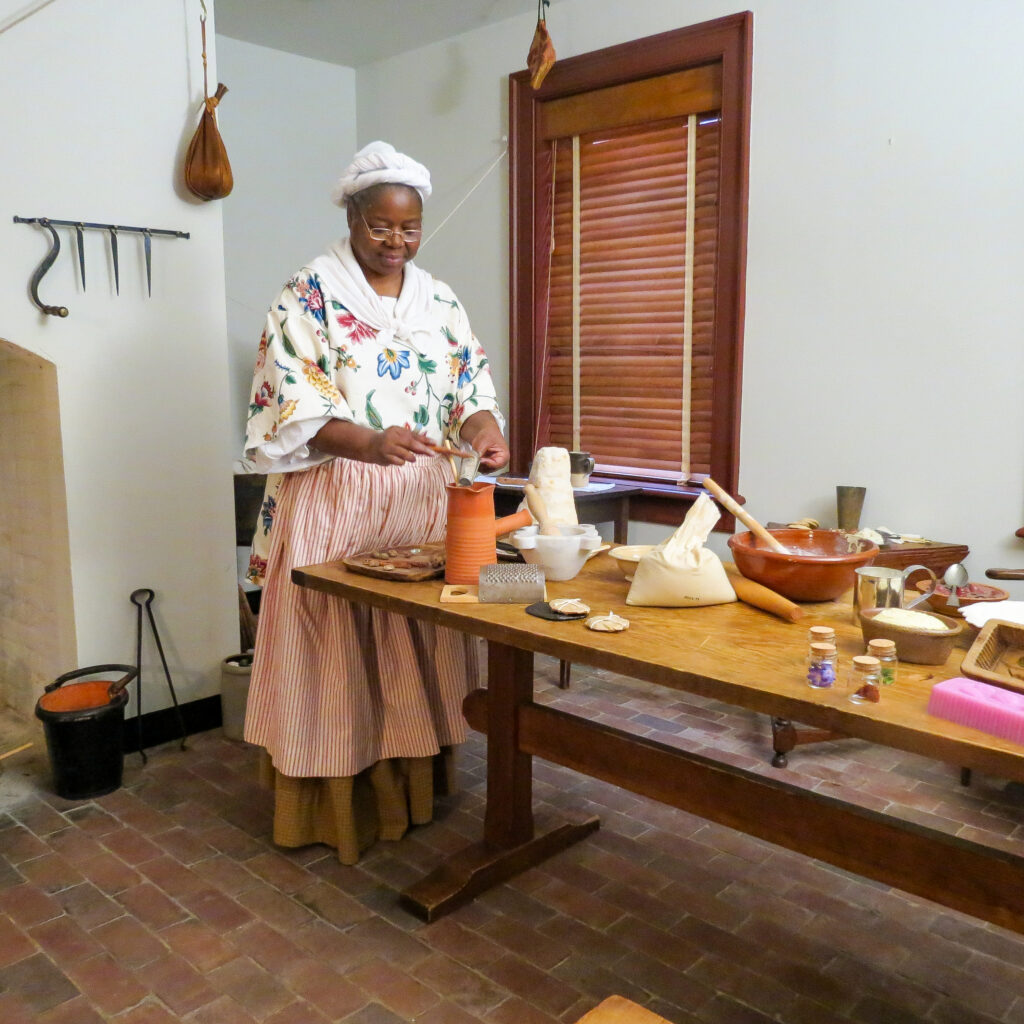
Beyond the dining room, the kitchens reveal another layer of holiday preparation. Here, foods in various stages of completion hint at the labor behind the display above. A flummery has been turned out from its mold, its smooth surface reflecting both technical skill and decorative intent. This preparation was key to ensuring the success of a colonial Christmas feast.
Taken together, these holiday food displays illuminate more than festive menus. Rather, they offer insight into colonial ideas of hospitality, refinement, and social performance.
Gentility, Marriage, and Ambition
Well-educated and the son of a prosperous planter family, William Paca began an eventful year in 1763. He launched his professional life in private legal practice in Annapolis, a thriving port city widely admired for its elegance, sociability, and architectural sophistication during what was called the city’s “Golden Age.” Colonial Christmas traditions were well preserved then. That same year, he married Mary Chew, daughter of a prominent local family, and began construction on a five-part brick house that would serve as their principal residence. Set on two acres, the property would include an elaborate terraced pleasure garden that reflected both social ambition and refined taste. Together, these milestones marked the start of Paca’s personal, professional, and social life in one of colonial America’s most genteel cities.
A Household Built on Aspiration—and Labor
Paca lived in the house from the 1760s through 1780, a period that coincided with his growing political prominence. William and Mary Paca had three children, though only one survived to adulthood. For several months, they also cared for an orphaned niece. In addition to the Paca family, 6-10 people were enslaved at this site to perform domestic duties and gardening tasks. They included three women named Affey, Poll, and Sarah, two girls named Bett and Sall, and a man named Denby.1
This enslaved domestic staff’s labor sustained daily life and made the household’s refined routines possible, including celebrations of a colonial Christmas.